Two more years?

Unlikely.

Why the negativity? Well, I am celebrating my two-year blogiversary in classic Irish Mammy style.

This is how the routine usually works:

Me: Fancy going to that Cliff Richard Tribute show?
My Mother: When is it on?
Me: March… eh…2018.
MM: Ah, maybe, if I’m still around then.

Not really. She’s strictly a Sinatra woman.

So yeah, two years as a German truck-driver called Claus masquerading as a put-upon middle-aged Irish woman. Here are my stats:

Anticipated benefits from blogging before starting:
Substitute for a hobby 24%
Releasing internal monologues/dialogues 25 %
Staving off hunger/anxiety 51%

Marathon, black silhouettes of runners on the sunset

Wouldn’t you think they’d get themselves a real hobby

Actual benefits derived from blogging:
Substitute for a hobby 2%
Staving off hunger/anxiety 3%
Getting lost in the moment 15%
Releasing internal monologue/dialogues 80%

Prevailing feelings while actually blogging:
Slight mortification. Seriously, who is going to read this shite? 10%
The lethal combination of confidence and righteousness.
Seriously, I don’t think this is half-bad, even if I say so myself 20%
Bono really is an insufferable wanker 21%
Hunger 22%
Reasonable contentment from the distraction of concentrating on the moment in manner similar to following a recipe. Mixing ingredients requires the usually elusive present-moment thinking. Especially when those ingredients include righteousness and verbosity. 27%

Prevailing feelings directly after blogging*:
Slight mortification. Seriously, who is going to read this shite? 50%
The lethal combination of confidence and righteousness. Seriously, who is..etc. 50%
*before typos discovered two weeks later, if at all

The blogger I’ll never be but love others for being:
Themed or focused
Curator of an engaging and lively comments section
Non-anonymous

Reasons for going anonymous:
To hide from Bono’s ‘people’
Getting to play with more than one persona than if I went with one public version
The freedom of unrestricted thinking and motivation
Sometimes I’m not quite sure

The downsides of being anonymous:
Enabling unrestricted freewheeling that leaves a spaghetti junction of thoughts and themes, which lets a few in but shut plenty out. Probably.

Most Delicate blogging balancing acts:
Earnestness with lightness
Eating with typing
Reading others with not giving up
Truth with truth*
Meaning with understanding
*Duplicate words. Please complete as instructed

Not a mistake. One woman’s joke is another’s man’s truth. Searing honesty comes in more than one size. Naked words on a page might do it for one; but the treasures of what lies between the words of other bloggers can often pull a mightier punch.

Any final comments?
Thanks for reading

Things I always thought were hard to make but aren’t

French onion soup, for instance. A dish that can instantly transport me to a Montmartre corner café where someone is sure to be playing a sombre number on the grand piano that takes up half the room while everyone looks away determinedly grumpy. But for some reason it feels like it should feel like the zenith of cultural immersion, and I am convincing myself I am completely at one with the place.

I do native very well in places where there is no requirement to smile, speak, or wear a bikini. I was once asked the time by a local in Poland back in the 90s. Or at least I think that’s what he said. Maybe it was “cheer up, love, it may never happen”, which would’ve been a bit rich given the strong whiff of austerity about the place, and the main dish on any given menu being radiator soup. “Yeah, well, as least we’ve started to partially pay for our own road repairs”, I would’ve nose-flingingly scoffed had that been the case, as an acknowledgement of Ireland’s then revolutionary weaning off its over-dependency on the EU infrastructural improvement budget. The only reason I knew that, was because the government of the day used to notify us on massive roadside signs (rough translation: “Don’t get us wrong – we’re still scrounging, just not as much”). These youthful accession states could only dream of such misplaced smugness.

I also almost cut it as a drunk Dutch person once when I confidently demanded frites from a street vendor after a few *mimes rapid movement of glass to mouth action* only to give the game away by requesting an immodest amount of Thousand Island dressing in Ireland’s native language – English. Not content with presenting myself as a knob-end, I went on to helpfully try  to explain my urgent need further in reeeeeeeeeeally slloooooooooow, yet R E A L L Y L O U D, English. But hey, I’m merely boasting now.

So yeah, I braved the recipe book earlier and it turns out all you need for French onion soup are the following:

A miserable face
Shitload of onions
Beef stock
Red wine
Garlic
Jackie-O shades (for preparation).

And, voila.

Only this is not one of those blogs that parades its culinary triumphs visually while labouring under the notion it looks exactly as it does in the book, or that anyone gives a hoot either way. I’ll leave this one to your imagination.
Picture yourself tucking into a bowl of authentic onion-soup, mandatory tear-jerker radiating off the ivories, everyone looking suitably glum, odd woman in corner trying to frown a little too hard and drawing attention to herself with eager brow furrowing and…….CRASH.

That’d be the sound of my mate tumbling down the spiral staircase. There’s always someone to take the bad look off me.

5 reasons to see Sing Street

  1. For nailing the back-combed ’80s aesthetic. This is the film Spielberg might’ve made had he grown up in Ireland where the clergy were our alien life form
  2. For the nostalgia, particularly drowning out bickering parents with The Next Best Thing on the turntable, pausing momentarily to speculate on the fate of their marriage with similarly nonchalant siblings. But not for that long
  3. For a few seconds of The Blades’ Down Market
  4. For championing teenage misfits in all their hormonally simmering, earnest, clumsy world-conquering crusade. Especially Jack Reynor’s jaded 21 year-old teenager who has seen it all
  5. For making the clear case for why prom night always beats the most extravagant and wild debs. Always.

Power failure

What happens when the electricity goes out in the office?

The first thing everyone does is go into denial.

Ten seconds. That’s roughly how long it took between gazing at the blank screen, up at the light with its filament dying like a flicked fag-end, over to the charger no longer charging, back to the blank screen, and blinking for a bit before surrendering to the possibility that electricity had deserted the building. This was marginally longer than everyone else who had already been flushed out of their office into the corridor by disbelief over what was happening. Not today. Not now.

It was a panic I understood having shored up a shitload of admin for this day that was due to have me hatching a new crease across my forehead by close of business. With or without responding to passive-aggressive e-mails from self-regarding managers. Or over-ingratiating myself to the cleaners. Or hoping no-one could hear me doing a wee while they made a cuppa in the kitchen right next door.

“Has the power gone out?”, exclaimed everyone in unison. It’s not often we get to exclaim anything. Maybe on the rare occasion when the travel expenses haven’t been processed, or a team meeting has been proposed. The alarm was doing an unsubtle job of answering the obvious question but we were not done with them yet.

“Has yours gone out?”, inquired the occupants of the office above mine.

“Yes, has yours?”, I helpfully countered.

The second thing everyone does is to speculate on why it has gone out.

“I let the man in earlier to fix the central heating. Maybe it was him”, announced Christine setting the ball of suspicion in motion.

“Surely that wouldn’t cause the power to go out”, replied John, suddenly an expert plumber.

“Maybe he did it by accident”, pleaded Mary, who would be inclined to give Hitler the benefit of the doubt.

“Are the phones working?” I felt obliged to contribute to the theorising and what better way than to offer another unhelpful question.

By now, John had taken command of the receptionist’s seat and was dialling various numbers starting with head office, 300 metres round the corner. John is the longest-serving and oldest member of the team so assumes authority with ease and control. It was John who phoned our colleague after his house was subject to an arson attack to offer all our sympathy. And it was John who gave us all permission to laugh by cracking a joke about it being the work of some of his clients. The official line is that it was a case of mistaken identity. None of us are that certain but we wouldn’t ever admit it to one another.

When I say ‘team’, I mean a random rag-bag of individuals who can frequently be heard asking each other what it is they actually do.  These exchanges occur during the slow motion minutes waiting for the ping of the microwave to call time on another round of small-talk. I tend to think the word ‘actually’ is invested with a heavy degree of suspicion. You wouldn’t hear someone asking another “what is your name, actually?” as if the one they go by isn’t it at all.

“What’s happening? Has your electricity gone out? We’re in darkness down here”, declared John, his legs crossed and perched across the desk demonstrating his indifference along with his potential as an understudy for a role in Glengarry Glen Ross. A man of his world-weariness should be conning gullible people into parting with precious cash for some real estate while straining to conceal his desperation, not acting as a conduit for questions that no-one has the answer to yet.

“OK, I’ll hold” [covers receiver] “she’s gone to find out.”

Everyone maintained an obedient silence.

“Sit tight? OK, we’ll do that. Thanks, girl”. He calls every woman that. I’m probably supposed to be annoyed by it but I couldn’t be arsed.

“She told us we have to sit tight, it should be sorted soon”.

The next thing everyone does is to get giddy.

Thirty minutes passed and by now the support group (Coping with Darkness) had swollen to half a dozen. Jennifer was the last to step out from her office to join the fray. She draped herself across two of the seats usually reserved for the public and jokingly asked if anyone had a bottle. This caught everyone by surprise, probably for the same reason: until that moment, Jennifer was the least likely of the group to hint at the existence of drink nevermind suggest we share one, even if it was imaginary.  She is the only person to record her time-sheet accurately to the minute (e.g. arrival: 8:57am, departure: 17:03pm) and exhibits a degree of sober efficiency the rest of us only ever get to be mildly resentful about.

John couldn’t resist it any longer and set about disentangling the coiled chord on the phone that had been bugging him. I did a 360 swivel on the chair and reminisced about our teenage prank he reminded me about.  Cold-calling folk on behalf of the national telephone company to request that they measure said chord by stretching it as far as they could was a popular pastime circa age 13.

breakfast club

At least they had electricity

The next thing that happens is that no-one wants the electricity back on.

Just yet.

Forty minutes later, folk who wouldn’t ordinarily break breath together interrupted each other with stories and wise-cracks. Shane rapidly fired out witticisms in his droll voice. Boring Shane whose default setting is to nod sideways when he means yes and no. He royally took the piss out of us all, probably in the knowledge he had a narrow window. The power would return soon and he’d be forced back into nodding and awkwardly banging into people in the tiny kitchen.

Ann was regaling us all with her typing skills (“I have 140 words a minute” Shane: “Talking or typing?”) when there was a brief flicker; then another. The small matter of the best local pub was being given consideration when there was a third that didn’t go out. The power had returned.

Then we all returned to normal.

No-one budged for another few minutes. The novelty of the unexpected huddle had unleashed an uncustomary air of conviviality folk were heating themselves up against. John got up first. “Well, folks. I don’t know about you lot, but I’m going home. Those computers won’t be right till tomorrow”.

And with that the middle-aged version of The Breakfast Club had come to an end. Details of the Christmas party were circulated the following day and we shuffled awkwardly around the microwave pitching our competing excuses for why it’s unlikely we’ll make it. Everyone except Jennifer. And maybe Shane who nodded yes and no.

Divorcing union jack

Lately we’ve been taking short-cuts through back-streets to shave a few minutes off the lunch-run. All in an effort to get her to the minder then back to work on time. So we turn left instead of right; left again, another left, then right. Past the corner shop with perennially balding shelves, then onwards under the bunting that salutes us over speed-ramps through to the main road.

Against every instinct, I tell her the locals must be having a party when she presses me on the union jacks overhead. Wrong answer, she asserts. They’re having a disco. I guess she’s not far wrong, if the disco is a slow-set in a draughty school hall somewhere in the early ’80s. In many respects, the town is not unlike the equivalent of two species awkwardly lined up against opposing walls. One too paralysed by fear to ask the other out; the other convinced they’ll never be asked. While everyone knows The Specials’ Ghost Town is impossible to dance to anyway.

With eyes still misty from centenary celebrations over the border, I’ve been living down to stereotypical behaviour expected of me by taking a great deal of time to think about What It All Means. This Irishness. Of ours. Of mine. And my Mary Robinson Claw™ is still very much up in the air.
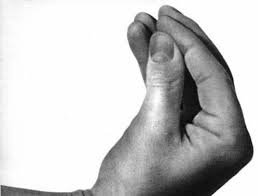
hand

Member of the Mnás gives the fingers

I’ve gone through the mandatory motions. I reverently stroked my chin to  Minister for History, Diarmuid Ferriter; shuddered at the prospect of Sean Gallagher presiding over poetic state-of-the-nation addresses; had odd where-were-you-when-Riverdance-was-first-performed conversations following its comparison to Centenary. And before you ask, yes, I heaved a sigh of relief that Onob resisted urges to swing the arms of Martin and Enda aloft to usher elusive peace to The Dail as only a true messiah can.

I tried to be a better begrudger. But alas, I am no further forward in cobbling together any convictions. I shall probably defrost the Centenary as I do Bjork albums – ambivalent at first, then raving about it a year later.

Perhaps it was to be expected given my internalised Irish O’Phobia. The same syndrome that had me giving wide berth to Irish bars abroad; and enclaves of diaspora during my brief years in London. Not the upwardly, neutral-accented, confident generation of new; but those of old who jived at the crossroads of survival. I deliberately chose not to work with the ‘disadvantaged’ London Irish ‘community’.  Rightly or wrongly, they provoked frustration and sadness in profuse and equal measure. Sadness that many were exported against their will; frustration with a variety of elements that kept them hemmed in to the margins. It was an emotional push-pull operation of delicate avoidance. I was unable to face the dark side of our soul, expressed through various valves: their language,  shorthand, the veil of silence, the melancholic shadow of God knows what. I couldn’t escape them however. I heard their stories daily through the mouths of Brazilians, Poles, Columbians. All sharing the status of fugitives from their homelands. United in isolation and loneliness with a nostalgic yearning for an idealised nation while in pursuit of better. Small surprise the Irish are held aloft the international shoulder, they had the English language to help accelerate integration.

Throughout these neighbourhoods, the cultural clock stopped a few generations back. Each summer I could hear the trad bands on Peckham Park at the annual Irish festival. What was a celebration of ‘Irishness’ seemed to me a bizarre exercise in time travel. Some frustrations are impossible to hang anywhere because that’s just the way it is. The interaction of emigration with time. Traditional modes of cultural expression survive unevolved, enabling the exiled to huddle together on foreign land, but eventually alienating them from their home soil. Too often it seemed they were suspended in a cultural time-warp. The commonly reported disorientation felt by returned ex-pats pointed to this. Many retreated back to their host eventually. One version of their tale suggested disdain for the lamentable loss of ‘traditional values’, another… the unavoidable modernisation of a country, the cultural landscape of which was now fluid and beyond recognition. One interpreted in terms of attack, the other in less malevolent terms of change. The way it is.

There’s no doubt the Celtic Tiger era left many every which way at sea.  Alienation and mental health problems prevail yet remain largely ignored. Consistent poverty persists. However, they have always existed. Just like the attack on ‘traditional values’ has. As have the competing strains of ‘Irishness’ and what it means to be Irish. Independence propped up a cultural infrastructure vertically imposed by church and conservative elements of the state, and many Irish people have always felt at odds with a certain narrow notion of ‘culture’. Irishness is ultimately an exercise in self-definition; as broad as it’s long.

I don’t consider myself nationalist in the classic sense, but I am anti-colonial. I understand why the Irish language became politicised  but still break out in hives when trotted out for ridicule. I could listen to Iarla O’Lionaird all day, but  would rather overtake a session stuffed with air-punching patriotic songs. My heart stops watching hurling, but I could cheerfully burn Michael Flatley at both ends. I love reading about the women caught up in the Independence movement. But I would like to learn more about the United Protestant men before them. Many ‘Irish’ people have been overlooked in official history.

The idea of the Irish as a homogenous group sharing a common reverence for emblematic cultural cornerstones has always rankled. We only have to look to our silenced exiled writers of the past as evidence.  Embedded in this, the dominance – and struggle of – ‘national pride’. What do all those terms mean? Who defines them? And what aspects can be defended and why? One person’s lament for ‘traditional values’ is another’s dismissal for naively ignoring the much needed introduction of freedoms and fight for equality. It would be disingenuous to deny the prevailing doctrine when the period of ‘traditional values’ flourished. The establishment of an authentic moral code is an evolving process, progressed on a rights-based agenda. To have it colonised and shaped by institutions in the business of moral absolutes undermined the project of humanity itself. As we saw.

Ireland is at an interesting, if precarious, point. Time and Europe dragged it out of its monolithic conservatism. It just needs the balls to retain the favourable values of yore. That responsibility hinges on everyone. It necessitates recognition by the defenders of ‘traditional values’ of the legitimacy of diversity of opinion and identity. One of the more enlightening and optimistic days I had recently was spent in the company of a group of aging nuns.There’s a sentence I never imagined writing. They fiercely articulated the need to discard the singular thinking and championed the arrival of diversity, in all its guises. Even though it has always been here.

Modernisation isn’t an attack on traditional heritage; traditional heritage is not the full expression of Irishness. Listening to the Peckham parade didn’t fill me with sneer. It frustrated me that the continuum of Irish culture, traditional – and contemporary – couldn’t be captured. But here it is. And strands compete for eminence within it. Gaelic is still sniffed at by the urbanites. Many of them in turn suffer their own cultural superiority complex. Moreover, ‘Irish culture’ in the South has been given room to evolve as it hasn’t been vulnerable to attack. It hasn’t served to unite a minority through a rigid codified system of culture as it has in the North. The pace of the removal of homogeneity of ‘Irishness’ proceeds in different gears either end. Irishness played out differently for reasons that don’t need repeating.

Yet, it is in this context that this year’s St. Patrick’s Day Parade in Dublin was led by a student activist campaigning for the rights of those with disabilities; while in this town it was headed by prominent clergy and ‘nationalist’ politicians. The old guards haven’t gone away, you know. Another reminder of the gulf that persists between the ‘Irish’ on the island. Fractures that run parallel with the cultural divisions between broad sections of the local British and the other ‘British’.  The London Irish have more in common with their brethern up here where the cultural and clerical clock lags behind its Southern neighbour, and further still from those across the water. It is partly why ‘socialist’ Sinn Fein can sit with ease at the high table of Irishness alongside elite members of the clergy. Their ease with it mirrored by the anchoring of fundamentalist protestantism to the other tribe’s celebratory outings. It is why the status of women is not up for consideration by either extreme. It is why issues of equality and reproductive rights are forsaken. It is certainly a contributing factor in why some grown women lack the gumption to do anything but sublet their conscience and grass an unrepentent teenager to the cops a week after she induced  an abortion on her own.

Unlike the old London Irish, these devout Irish will not be flirted with by the Republic in a bid to woo them down ‘home’ for a reminisence date; and your average British man has as much in common with a bowler hat wearing marcher as he does a Morris Dancer. Indifference is probably the best either group can avail of.

And between them all sit the Northern Irish. A chequered, complex, hybrid entity. The Other. Under pressure to declare which team they’re going to play for when the Olympics come round. Southern commentators  can always been relied on to adopt a keen interest that only appears when the critical topic of sport arises.

And then there’s me, straddling both jurisdictions and never fully feeling a sense of belonging in either. Southern heart, Northern Soul. I am border. If home is a sense of belonging, then I belong best along the Donegal coastline at 60 miles an hour with the speakers pumping. It’s not very practical.

So I’m here. Hat laid North. For the foreseeable. Softer of vowel, eager to join forces with the Other. One of them, but never one of them. An insider outsider. Under pressure from my four-year old to guess which Michael Jackson song they’ll be playing at their disco.

****

He ordered two drinks and we adjourned to the side table of a bar overlooking Great Victoria Street.   

“You’re from Boston, right?”

“I work in Boston. I’m from New York”

“Big Irish interest in Boston, isn’t there? Keen to see peace break out all over here, I suppose.”

“You could say that”

He lifted his glass to me, swirling the half-finished drink. “It’s made nearby, I understand,” he said.

“Aye. Up the road. Bushmills. It’s popular with tourists”.

“I’ve had it before – but I have to admit it tastes better in Ireland”

“Like Guinness tastes better in Dublin. And stick to calling it Northern Ireland. Although you’ll hear variations. If you’re a Loyalist you’ll call it Ulster, if you’re a Nationalist you’ll call it the North of Ireland or the Six Counties, if you’re the British Government you call it the Province.”

“And what do you call it, Mr. Starkey?”

“Home”

From Divorcing Jack by Colin Bateman

Say what?

Many’s the conversation I’d love to have overheard but didn’t so I’m forced to undertake some guesswork instead. To fill in some essential blanks as it were.

Example One:

On driving by a house with a pair of gigantic stone Irish wolfhounds aloft pillars either side of a 10 foot gate (digital keypad on the right) at the foot of a driveway leading to a…standard 1950’s bungalow. Child of Prague in the porch window optional.

Picture the scene:

A newly retired couple – let’s call them Mary and Tom – are strolling through the garden centre of a Sunday…

Mary: What about one of those windmills like the Cassidys have?

Tom doesn’t hear her because he got distracted by the joinery in the garden sheds ten feet back without her realising. He can’t help himself. He feels The Dark Stare and looks up to squint at whatever she’s pointing at.

Tom: Whatever you think yourself. I’m easy.

M: Sigh

T: What about this fountain-y yoke?

M: Mmmm. It’s OK. Would it not be hard to keep clean? *strolling on* Wait, what about these? *points to set of stone wolfhounds before going over to caress them*

T: They’re a bit big, are they not?

M: *reads label* There’s 30 per cent off them. Sure they match the gable wall.

Example Two:

Leaning back on the dentist’s chair trying to respond to his  considered questions while his fingers are shoved into my wide-open gob.

Picture the scene:

Young Sean at 17 filling in his CAO form…

Dad looking over his shoulder: What’s that you have down as your first choice?

Sean: Sociology in Cork

Dad: That’s hardly a career. What did Mammy say?

S: She said to choose whatever would make me happy

D: Mammy? *footsteps towards kitchen*

One hour later..

Mammy: But you’ve always been good at science. Would you not just pick one to keep him happy? What about medicine?

S: But I’m queasy, Ma. Remember that time I fainted in biology when they showed the video of that beatle trying to roll a ball of earth backwards up a hill.

M: That was because you were dehydrated from playing tennis at lunch beforehand.

S: Was it? *scratches head*

M: OK, well, what about dentistry?

S: Yeah, right, so I can what – fool around with the laughing gas?

M: There you go! Dentistry it is.

Example three:

On hearing a teenager in Northern Ireland was reported to the police by her flatmates for procuring abortion pills on-line.

Picture the scene…

Two flatmates – let’s call them Hannah and James – suspect their other flatmate has induced an abortion with pills bought over the net. The contents of a black bag lead them to believe she has followed through with her intent. Despite having only recently moved in with them, she discloses she is pregnant and hopes to raise enough money to enable her to travel to the UK for an abortion. She doesn’t, so orders the pills instead.

Hannah: *looks blank*

James: *looks blank*

H: What do you think we should do?

J: *shrugs* Check if she’s OK? whether she needs any help or support? Or we could just mind our own business.

Five minutes silence later…

H: What would Jesus do?

J: Mmmmm *contemplates question* Does it matter that my God is different to your God?

H: Not if we’re thinking the same thing

In unison: Call the PSNI?

*high five*

Random

On a railway platform somewhere between Boston and Philadelphia, the shoulders of a young woman droop in defeat as the train pulls away from her. All her belongings shrink inside as it rounds the corner out of sight. She aims the string of curses away from herself towards a train she can no longer see. The mutherf*ckin’ train.

An aggressive window-knock commands her eyes from across the tracks. From the stationary carriage she can make out a smiling stranger pointing enthusiastically to the seat opposite him. Except it is not a stranger but the bloke she had been flirting poorly with on the train that just pulled away. Except it wasn’t the train; she turned left onto the opposite platform on her return from the bathroom.

Her belongings are exactly the same size as before; her complexion a little more flushed as she composes herself.

*****

“Did you enjoy your day then?”, he asks, holding the prosecco bottle up to the light to read the x-ray of its emptiness.

“Sure. It was very relaxed”, she replies, sniffing the glass twice to make sure it’s hers. It is the only one on the table.

By relaxed, they both mean the successful suspension of mutual hostilities. And the absence of political ‘debate’.

“Courtesy and civility assured at all times, as Mary used to say”

“There was plenty of food to go round, too”

“And what about the speech?”

She arches a brow before looking away.

“Ah”

“For a moment I thought of interrupting him to ask if I was dead. And you seemed a bit emotional”

The accusatory tone is a reliable indicator that the thick wall of the garage succeeded in concealing the cracks in sibling civility; his crimson face chalked up to investment in the moment. The moment his father’s rehearsed words tumbled out feet first masking the sincerity of thanks for the sacrifices she made down the decades.

Not the moment his twelve year old self suddenly lost it with his ten year old sister minutes before he handed toasting duties over to him. When he rashly pulled her pride until it hurt as much as it once did her hair. He instantly regretted it but, like cranberry sauce, sorry isn’t something ever known to be brought into the house. Like all regressive juvenile combat, it will lie forgotten until next time a land-mine is unwittingly trodden on.

“Aye. I guess so. I’d just never heard him talk that way before”

His overriding memory from today will tumble out in correct incorrect order. He will always be glad to have been of third party service: to have enabled one of them to say things to the other the soundproofing of a long marriage prevents them from hearing when alone.

*****

“What’s the best piece of advice you were ever given?”

“There is not always an answer to every question”

“No, I mean –“

“No, that’s the best piece of advice I was ever given”

*****

Top 5…music documentaries

Searching for Sugar Man followed me around all weekend giving me a hankering for more of the same. More on that film in a minute, but first a nod to a few others that took up residence among my favourites and never left.

1. Buena Vista Social Club

Not long into this iconic film, children gather in a vast baroque hall in Havana. Sunlight swamps the interior showing off a faded glamour that has seen more opulent days. Young girls raise their legs to their ears striving for ballerina perfection, young boys swashbuckle forward with straight-armed determination during their fencing lesson. Headless horses are mounted and cartwheeled off, pirouettes are synchronised, bars are leapt on and rolled around. All against the backdrop of playful tunes swirling through the air from a piano in the corner. This is what passes for a gym in modern day Cuba. Undiluted joy without dialogue.

The pianist is snow-haired Ruben Gonzalez, one of the now-famous Cuban musicians from the 1950s that time had forgotten until Ry Cooder discovered they were alive and well. Wim Wenders takes care of directing duties, but the magic is all theirs. Any discordant notes come from the consequences of Castro’s vision and question marks over ideas of freedom and success in the viewer’s head.

2. The Last Waltz

“They got it now, Robbie”, Neil Young nods to Robbie Robertson as he strikes up the opening notes to Helpless. The sound glitch may have had less to do with the error of his fellow musicians than Young’s own timing. Robertson later quipped that editing out the remnants of white powder around his guest’s nose was the most expensive cocaine he ever bought.

Lyrical has been waxed and wrung on Mawti Scorsese’s legendary finale concert from The Band and their band of off-their-tits merry mates, but how many have singled out Van Morrison’s high kick for comment? You probably read it here last. One for the wee small hours somewhere between that impromptu first and fifth beer. The perfect sing-along party for one. “Turn it up!” and try not to injure yourself emulating Van.

3. Strange Powers

Giving us a rare glimpse into the off-limits world of Magnetic Fields’ misfit and lyricist, Stephin Merritt, this fly-on-the-wall film follows him over a decade. Magnetic Fields inhabit that category of bands that registers near obsession from fans, or blank faces from everyone else because they’d never heard of them. There is a disturbing growth of a third group that well-up at weddings over Peter Gabriel’s sacrilegious re-hashing of the doleful Book of Love. Insert your own imagined withering response from Merritt to that.

We know little more about Merritt by the end. The complexity of his character remains in the shadows as the light is shone on the process of making the music that bends us double. His weary baritone is cooked up in a tiny apartment over ukuleles, his loyal cellist in the bathroom, the dutiful bassist in the sink (probably), all conducted by Fields’ stalwart, Claudia Gonson. Access is given to the touching, if sometimes painful, dynamic between Merritt and the expressive pianist, the other half of his on-stage double banter act, and sometime manager. Gonson worries aloud she will be creatively left at sea if the ensemble were to wind-up. What’s left unsaid is what will be lost to her personally if they part, but it’s written all over her face.

They’re still together. So try to see them, and this, while you can.

4. Dig!

What do you get if you cross The Dandy Warhols with Brian Jonestown Massacre? Two bands united by a love of psychedelic sounds and a professed urgent need to jointly get the revolution started. Followed by parallel rivalry, success and failure, orders to beat up their fans, one-up-front-manship, and a lot of sheer madness in this romp of a film that has guaranteed both bands a certain cult status and their surly faces in the pantheon of documentary greats.

5. Searching for Sugar Man

And so back to our man, Sugar. Look away now if you’d prefer to see it fresh.

The film follows a pair of South African music-lovers in the 90s on their trail to track down 70s troubadour, Rodriguez. The Detroit native’s two albums of peace, love, and gentle political resistance, met with paltry US record sales and he was deported back to obscurity. Meanwhile, his music went on to achieve iconic status in South Africa, overtaking Elvis at the tills with his face becoming a poster-boy for a mass of white students united in their unreported resistance to apartheid.

I’ve since learned on watching the film, that the obscurity Rodriguez was condemned to was not altogether permanent or exclusive. It left a slightly funny aftertaste. That his music was an instrument of protest among white South Africans was independent of his success elsewhere, but the latter not entirely from the portrait of him as an artist who was exiled in commercial failure. That is the parallel subject of the film, along with the meaning of success, and the force of an indomitable spirit that will find a valve in civilian life. The more wry and philosophical comments on the relationship between class and dreams came from the mouths of the most ordinary people featured in the film.

For those reasons, any inaccuracies can be forgiven since it’s still a great yarn. It tells the story of a remarkable man, and gives a riveting insight to part of South Africa’s hidden history.

Feel free to share any recommendations, or views to the contrary.

Tombs of an unknown soldier

Hidden in an unmarked grave in her head,
the foetus of a formal education
aborted by back room absolutists.

Lying in repose in the tips of her fingers,
the budding writer gunned down
by guardians of saints and scholars.
Below knuckles needed more.
To knead, to Knock, to knit.

Beneath fancy notions,
the remains of professional progression;
disappeared by the Marriage Bar
before being discovered by a passerby
along the shoreline of her ambition years later
To be given the dignity of burial.

Encased in her top drawer
behind discontinued perfumes
and lilac scarves no longer worn,
the slim body of a thermometer.
As useful as iodine tablets
in the event of an attack on a nuclear family
from the prospect of another mouth to feed.

Resting at the bottom of a brandy urn,
the ashes of financial autonomy
occasionally stirred with a swirl
before she washes down the bittersweet
pill of freedom and toasts our himdependence.

Ireland, 2016