With contributions from women not usually heard on mainstream discussion panels.
Take it away there, wimmin…
https://audioboom.com/boos/4871739-and-where-were-the-women-when-history-was-made-jhiss

With contributions from women not usually heard on mainstream discussion panels.
Take it away there, wimmin…
https://audioboom.com/boos/4871739-and-where-were-the-women-when-history-was-made-jhiss
It used to be that visits were so infrequent, I was convinced they’d changed the carpet in my absence. The longer the gap, the odder it looked. Are you sure?, I’d casually interrogate, looking down at a previously unregistered row of flowers snaking under the glass table. From there it zigzagged towards another buoying up an assortment of exhibits proudly wearing their counties of origin like a status-tag.
Waterford still borders Belleek despite the arrival of Galway and other Rocha-come-latelies. Well, something’s different, I mumbled the other evening, ignoring the dust no longer visible to the octogenarian eye. Who’s that making his own tea in the kitchen? “Your Father”.
By the third day, our one wondered when we were going home. This could only have meant one of two things: 1. She was having an enjoyable time 2. She was having such a good time she was growing ever anxious about the inevitable Sunday-night-like Fear. Or (I’m gathering momentum here so feel it necessary to add a third) most likely 3. She was experiencing a disturbing combination of 1. and 2. We’ve all been there. In receipt of unfettered treats knowing there’s a comedown at the bottom of the next empty wrapper and a return to front-seat issued orders about bed-time. They get you into a confined space where you can’t move for two hours and set all sorts of conditions. You hate it now, I smiled sympathetically, but will learn to master it by the time you’re in a serious relationship.
By the fourth day, I was beginning to feel at home. This could only have meant one of two things 1. I was at home 2. I was at home, but it was my home. Or (work with me) 3. I was experiencing a disturbing inner conflict between rejection and romanticising of 1. and 2. We’ve all been there. In receipt of unwavering hospitality from one, and from the other a raised brow at the level of oil usage. They get you into a confined space where you can’t move for two days and set all sorts of unspoken conditions for keeping it civil. You hate it now, she smiled up at me sympathetically, but just think what all’s ahead of me.
I thought better of sticking my tongue out at her, so robbed a Curly Wurly instead.
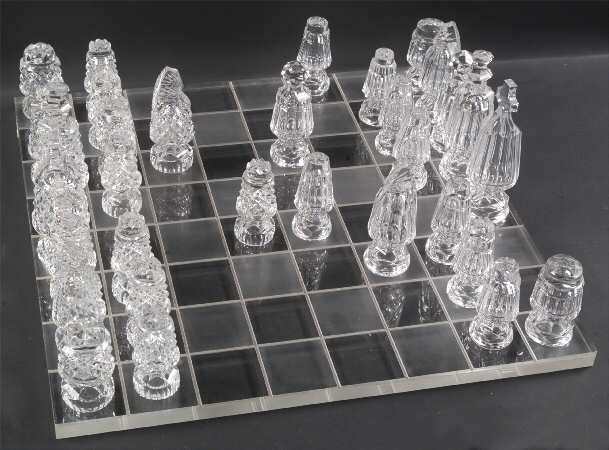
Seeing through each other
“Golf is very different when it comes to this Olympics. I know we’ll be coming in for criticism for not playing but, at the end of the day, the profile of golfers is older than the rest of the athletes. There are a lot of golfers who are married with young families, kids on the way, whereas 99.9% of athletes in the Olympics are single people…. These guys [Shane Lowry, Rory McElroy etc.], two of them are just married. Graham has got another baby on the way, they have other priorities…. It’s a completely different age profile.
[In response to a slagging from Katie Taylor]..Katie Taylor’s not married, she’s not thinking of having a child in the next couple of months. The three golfers from Ireland that pulled out – two of them are recently married, and one has got a baby on the way”
Padraig Harrington in conversation with Matt Cooper, Today FM
Take the Quiz!
a) The inexplicable outbreak of morning sickness among Irish male golfers
b) The decision of members of Team Ireland to withdraw from the Rio Olympics
c) The rumoured deflection from the discovery that Graham McDowell is actually an American called Todd Saunders masquerading as an Irishman who has been disqualified from the team
2. What is a ‘baby’?
a) A bogie and a birdie that happens simultaneously
b) An identity crisis
c) A corporate sponsorship contract
3. When did golf last feature in the Olympics?
a) 1904
b) 1984
c) We’re still waiting for the last players to finish up
4. Which year were the comments made?
a) 1905
b) 1904
c) 1906
5. What are babies born to unmarried female athletes commonly known as?
a) Non-legally binding sponsorship contracts
b) Fair game
c) The spit of Wayne Rooney
6. Complete the following saying: First comes love, then comes marriage, then comes:
a) A joint twitter account
b) A v-neck jumper
c) Membership of the Iona Institute
7. Which Olympics has Katie Taylor declared she will go from amateur broody to professional broody:
a) 2020
b) 1904
c) 2024
8. Name the odd one out:
a) Graham McDowell
b) Michael Flatley
c) A Cad(dy)
Answers:
1.(c); 2.(a); 3.(c); 4. (b) 5. (b) 6. (c); 7. (b); 8. (c)

Graham McDowell in training for the Irish Open
Himself: So are you gonna watch the game with me tomorrow?
Herself: Huh?
Him: The Ireland game
Her: What Ireland game?
Him: The football! Silly billy
She: We don’t live in Ireland. We live in…in.. the North Pole
He throws me a look. It wasn’t me. Accurate though it may be.
It’s on the tip of my tongue to chalk my collapsed defenses up to the potentially lengthy gap between this ritual and the next. But I don’t. I go on craning my neck as strenuously as my neighbour engaging me in parental small-talk . Enthusiastically we strain to nab a glimpse of little ones tucked under gowns and mortar boards. Defeated by the cuteness of it all, I quietly roll thought balls to toss indiscriminately overhead.
You have to hand it to the Church for pilfering the critical glass-clinking moments from cradle to grave. And Hallmark for making the most of the spaces in between. Cousin’s Day is an opportunity to pause and reflect, and remember how your parents would’ve preferred you had turned out. While nothing says ‘I Love You, Daddy’ quite like a little bear fridge magnet and a bottle opener in the shape of a football. It’s the small things that matter.
But it’s the big things that deceptively give the appearance of being small when really they’re just far away. It’s this apparent insignificance that continues to ripen. Always for the taking by the Cardinal sinned ever since they first flash-mobbed the corridors of our newborn sovereignty. And it’s this insignificance that’s the last cornerstone of Catholicism standing stoic as the once dominant moral policeforce lie dying in all but one Green Field.
It could’ve been worse. Posing as a bride of Christ pales in comparison to digging up the dead every few years for a boogie. And becoming one of God’s foot soldiers at 12 in exchange for a judiciously chosen name beats being drafted into the local militia. He who rules the world rocks the ritual. Those immune to the inherent need for celebration are not indigenous to this world. Let those who never felt a lump in their throat cast the first spray of confetti. Oh no, wait, they banned that a few years back. Sorry. Dems the man-made rules.
For many, the processional outings of their children are only days, far away. For others, far away days are weightless without context. Eventually we discover they’re neither. When they do come round, we find ourselves squaring reason with emotion before reconciling both with whatever ritualistic apparatus is available to us. The machinery that enables us to come together to raise a toast. And boast of unexpected enjoyment from it afterall.
Not for our one a bridal gownette, nor name-taking coercion further on. Perhaps a mild twinge of envy from her parents at the guaranteed calendar of events laid out for others. Meanwhile, nothing demonstrates the transition from nursery to primary school quite like the deafening rendition of I Can See a Rainbow and an inexhaustible supply of Monster Munch. Such hypocrisy. The parents don’t believe in giving children junk. But it’s just one day, right?

Class of 2016
By Cora Sure-Look
Pro-voice campaigners know that theirs is a minority position and that the vast majority of Irish people think that reason on demand is abhorrent. So in order to get what they want, they must chip away at silence, building a campaign around calls for reason and nuance on platforms such as Twitter, where the counter argument has a logic-limiting condition.
Once a little bit of reason is permitted, it is easier to justify a little more, and so on. The public becomes blind to the horror of logic, and deaf to calls to protect the rights of those who wouldn’t be able demonstrate their lack of reason today were it not for the 148 characters to prove it.
Pro-voice campaigners, allied to the political pragmatic, and heavily funded by compassion, have used the same strategy across the world. Every incident of their reason on demand regime began as “restrictive” but once the door to reason was unlocked, the rest was just a matter of exploiting those restrictions until more ground was conceded. 148 characters has increasingly been followed by another 148, and another, and so on and so forth.
It’s undeniable that in high-profile cases used to push for reason, generalisations are airbrushed out of the picture. Reason is just a procedure. An exchange of views on a keyboard. The fact that it is the deliberate destruction of generalisations is tactically suppressed. We are supposed to pretend that somehow it doesn’t matter.
It’s easy to accuse Pro-lific people of burying their heads in the sand for not accepting reason while wilfully refusing to discuss what reason actually involves.
In Pro-lific circles, there are numerous stories of individuals who contemplated reason only to change their minds at the last minute. Many of them say it’s thanks to the 148 word limit that they were spared the pain of carrying their point through to its logical conclusion.
Some might like to believe that dilution of the 148 word limit would bring “an end to crude debate” – that we would have dealt with the lack of reason question “once and for all”. This is totally naïve.
But maybe we would be saved from reason if the 148 character limit was dismantled? This is a nonsense claim. The extension of characters has nothing to do with saving face. Ireland, with its cherished lack of reason, is one of the safest countries in the world in which to be willfully dogmatic. Official reports into various tragedies involving the demise of common sense confirm these had to do with systems failure and not the illegality of reason.
That’s why it’s vital that certain UN(reasonable) committees and groups like Am Nasty International join in the fight against logic.
The current character limit, which claims brevity as a treatment for stupidity, is more than adequate. The very foundation of theocracy is built on silencing its critics. The 148 character limit must be protected.
Cora Sure-Look is Deputy Chairperson of the Pro-lific Campaign
Lately we’ve been taking short-cuts through back-streets to shave a few minutes off the lunch-run. All in an effort to get her to the minder then back to work on time. So we turn left instead of right; left again, another left, then right. Past the corner shop with perennially balding shelves, then onwards under the bunting that salutes us over speed-ramps through to the main road.
Against every instinct, I tell her the locals must be having a party when she presses me on the union jacks overhead. Wrong answer, she asserts. They’re having a disco. I guess she’s not far wrong, if the disco is a slow-set in a draughty school hall somewhere in the early ’80s. In many respects, the town is not unlike the equivalent of two species awkwardly lined up against opposing walls. One too paralysed by fear to ask the other out; the other convinced they’ll never be asked. While everyone knows The Specials’ Ghost Town is impossible to dance to anyway.
With eyes still misty from centenary celebrations over the border, I’ve been living down to stereotypical behaviour expected of me by taking a great deal of time to think about What It All Means. This Irishness. Of ours. Of mine. And my Mary Robinson Claw™ is still very much up in the air.
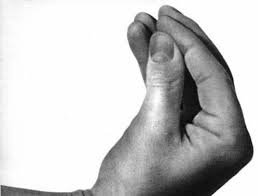
Member of the Mnás gives the fingers
I’ve gone through the mandatory motions. I reverently stroked my chin to Minister for History, Diarmuid Ferriter; shuddered at the prospect of Sean Gallagher presiding over poetic state-of-the-nation addresses; had odd where-were-you-when-Riverdance-was-first-performed conversations following its comparison to Centenary. And before you ask, yes, I heaved a sigh of relief that Onob resisted urges to swing the arms of Martin and Enda aloft to usher elusive peace to The Dail as only a true messiah can.
I tried to be a better begrudger. But alas, I am no further forward in cobbling together any convictions. I shall probably defrost the Centenary as I do Bjork albums – ambivalent at first, then raving about it a year later.
Perhaps it was to be expected given my internalised Irish O’Phobia. The same syndrome that had me giving wide berth to Irish bars abroad; and enclaves of diaspora during my brief years in London. Not the upwardly, neutral-accented, confident generation of new; but those of old who jived at the crossroads of survival. I deliberately chose not to work with the ‘disadvantaged’ London Irish ‘community’. Rightly or wrongly, they provoked frustration and sadness in profuse and equal measure. Sadness that many were exported against their will; frustration with a variety of elements that kept them hemmed in to the margins. It was an emotional push-pull operation of delicate avoidance. I was unable to face the dark side of our soul, expressed through various valves: their language, shorthand, the veil of silence, the melancholic shadow of God knows what. I couldn’t escape them however. I heard their stories daily through the mouths of Brazilians, Poles, Columbians. All sharing the status of fugitives from their homelands. United in isolation and loneliness with a nostalgic yearning for an idealised nation while in pursuit of better. Small surprise the Irish are held aloft the international shoulder, they had the English language to help accelerate integration.
Throughout these neighbourhoods, the cultural clock stopped a few generations back. Each summer I could hear the trad bands on Peckham Park at the annual Irish festival. What was a celebration of ‘Irishness’ seemed to me a bizarre exercise in time travel. Some frustrations are impossible to hang anywhere because that’s just the way it is. The interaction of emigration with time. Traditional modes of cultural expression survive unevolved, enabling the exiled to huddle together on foreign land, but eventually alienating them from their home soil. Too often it seemed they were suspended in a cultural time-warp. The commonly reported disorientation felt by returned ex-pats pointed to this. Many retreated back to their host eventually. One version of their tale suggested disdain for the lamentable loss of ‘traditional values’, another… the unavoidable modernisation of a country, the cultural landscape of which was now fluid and beyond recognition. One interpreted in terms of attack, the other in less malevolent terms of change. The way it is.
There’s no doubt the Celtic Tiger era left many every which way at sea. Alienation and mental health problems prevail yet remain largely ignored. Consistent poverty persists. However, they have always existed. Just like the attack on ‘traditional values’ has. As have the competing strains of ‘Irishness’ and what it means to be Irish. Independence propped up a cultural infrastructure vertically imposed by church and conservative elements of the state, and many Irish people have always felt at odds with a certain narrow notion of ‘culture’. Irishness is ultimately an exercise in self-definition; as broad as it’s long.
I don’t consider myself nationalist in the classic sense, but I am anti-colonial. I understand why the Irish language became politicised but still break out in hives when trotted out for ridicule. I could listen to Iarla O’Lionaird all day, but would rather overtake a session stuffed with air-punching patriotic songs. My heart stops watching hurling, but I could cheerfully burn Michael Flatley at both ends. I love reading about the women caught up in the Independence movement. But I would like to learn more about the United Protestant men before them. Many ‘Irish’ people have been overlooked in official history.
The idea of the Irish as a homogenous group sharing a common reverence for emblematic cultural cornerstones has always rankled. We only have to look to our silenced exiled writers of the past as evidence. Embedded in this, the dominance – and struggle of – ‘national pride’. What do all those terms mean? Who defines them? And what aspects can be defended and why? One person’s lament for ‘traditional values’ is another’s dismissal for naively ignoring the much needed introduction of freedoms and fight for equality. It would be disingenuous to deny the prevailing doctrine when the period of ‘traditional values’ flourished. The establishment of an authentic moral code is an evolving process, progressed on a rights-based agenda. To have it colonised and shaped by institutions in the business of moral absolutes undermined the project of humanity itself. As we saw.
Ireland is at an interesting, if precarious, point. Time and Europe dragged it out of its monolithic conservatism. It just needs the balls to retain the favourable values of yore. That responsibility hinges on everyone. It necessitates recognition by the defenders of ‘traditional values’ of the legitimacy of diversity of opinion and identity. One of the more enlightening and optimistic days I had recently was spent in the company of a group of aging nuns.There’s a sentence I never imagined writing. They fiercely articulated the need to discard the singular thinking and championed the arrival of diversity, in all its guises. Even though it has always been here.
Modernisation isn’t an attack on traditional heritage; traditional heritage is not the full expression of Irishness. Listening to the Peckham parade didn’t fill me with sneer. It frustrated me that the continuum of Irish culture, traditional – and contemporary – couldn’t be captured. But here it is. And strands compete for eminence within it. Gaelic is still sniffed at by the urbanites. Many of them in turn suffer their own cultural superiority complex. Moreover, ‘Irish culture’ in the South has been given room to evolve as it hasn’t been vulnerable to attack. It hasn’t served to unite a minority through a rigid codified system of culture as it has in the North. The pace of the removal of homogeneity of ‘Irishness’ proceeds in different gears either end. Irishness played out differently for reasons that don’t need repeating.
Yet, it is in this context that this year’s St. Patrick’s Day Parade in Dublin was led by a student activist campaigning for the rights of those with disabilities; while in this town it was headed by prominent clergy and ‘nationalist’ politicians. The old guards haven’t gone away, you know. Another reminder of the gulf that persists between the ‘Irish’ on the island. Fractures that run parallel with the cultural divisions between broad sections of the local British and the other ‘British’. The London Irish have more in common with their brethern up here where the cultural and clerical clock lags behind its Southern neighbour, and further still from those across the water. It is partly why ‘socialist’ Sinn Fein can sit with ease at the high table of Irishness alongside elite members of the clergy. Their ease with it mirrored by the anchoring of fundamentalist protestantism to the other tribe’s celebratory outings. It is why the status of women is not up for consideration by either extreme. It is why issues of equality and reproductive rights are forsaken. It is certainly a contributing factor in why some grown women lack the gumption to do anything but sublet their conscience and grass an unrepentent teenager to the cops a week after she induced an abortion on her own.
Unlike the old London Irish, these devout Irish will not be flirted with by the Republic in a bid to woo them down ‘home’ for a reminisence date; and your average British man has as much in common with a bowler hat wearing marcher as he does a Morris Dancer. Indifference is probably the best either group can avail of.
And between them all sit the Northern Irish. A chequered, complex, hybrid entity. The Other. Under pressure to declare which team they’re going to play for when the Olympics come round. Southern commentators can always been relied on to adopt a keen interest that only appears when the critical topic of sport arises.
And then there’s me, straddling both jurisdictions and never fully feeling a sense of belonging in either. Southern heart, Northern Soul. I am border. If home is a sense of belonging, then I belong best along the Donegal coastline at 60 miles an hour with the speakers pumping. It’s not very practical.
So I’m here. Hat laid North. For the foreseeable. Softer of vowel, eager to join forces with the Other. One of them, but never one of them. An insider outsider. Under pressure from my four-year old to guess which Michael Jackson song they’ll be playing at their disco.
****
He ordered two drinks and we adjourned to the side table of a bar overlooking Great Victoria Street.
“You’re from Boston, right?”
“I work in Boston. I’m from New York”
“Big Irish interest in Boston, isn’t there? Keen to see peace break out all over here, I suppose.”
“You could say that”
He lifted his glass to me, swirling the half-finished drink. “It’s made nearby, I understand,” he said.
“Aye. Up the road. Bushmills. It’s popular with tourists”.
“I’ve had it before – but I have to admit it tastes better in Ireland”
“Like Guinness tastes better in Dublin. And stick to calling it Northern Ireland. Although you’ll hear variations. If you’re a Loyalist you’ll call it Ulster, if you’re a Nationalist you’ll call it the North of Ireland or the Six Counties, if you’re the British Government you call it the Province.”
“And what do you call it, Mr. Starkey?”
“Home”
From Divorcing Jack by Colin Bateman
Many’s the conversation I’d love to have overheard but didn’t so I’m forced to undertake some guesswork instead. To fill in some essential blanks as it were.
Example One:
On driving by a house with a pair of gigantic stone Irish wolfhounds aloft pillars either side of a 10 foot gate (digital keypad on the right) at the foot of a driveway leading to a…standard 1950’s bungalow. Child of Prague in the porch window optional.
Picture the scene:
A newly retired couple – let’s call them Mary and Tom – are strolling through the garden centre of a Sunday…
Mary: What about one of those windmills like the Cassidys have?
Tom doesn’t hear her because he got distracted by the joinery in the garden sheds ten feet back without her realising. He can’t help himself. He feels The Dark Stare and looks up to squint at whatever she’s pointing at.
Tom: Whatever you think yourself. I’m easy.
M: Sigh
T: What about this fountain-y yoke?
M: Mmmm. It’s OK. Would it not be hard to keep clean? *strolling on* Wait, what about these? *points to set of stone wolfhounds before going over to caress them*
T: They’re a bit big, are they not?
M: *reads label* There’s 30 per cent off them. Sure they match the gable wall.
Example Two:
Leaning back on the dentist’s chair trying to respond to his considered questions while his fingers are shoved into my wide-open gob.
Picture the scene:
Young Sean at 17 filling in his CAO form…
Dad looking over his shoulder: What’s that you have down as your first choice?
Sean: Sociology in Cork
Dad: That’s hardly a career. What did Mammy say?
S: She said to choose whatever would make me happy
D: Mammy? *footsteps towards kitchen*
One hour later..
Mammy: But you’ve always been good at science. Would you not just pick one to keep him happy? What about medicine?
S: But I’m queasy, Ma. Remember that time I fainted in biology when they showed the video of that beatle trying to roll a ball of earth backwards up a hill.
M: That was because you were dehydrated from playing tennis at lunch beforehand.
S: Was it? *scratches head*
M: OK, well, what about dentistry?
S: Yeah, right, so I can what – fool around with the laughing gas?
M: There you go! Dentistry it is.
Example three:
Picture the scene…
Two flatmates – let’s call them Hannah and James – suspect their other flatmate has induced an abortion with pills bought over the net. The contents of a black bag lead them to believe she has followed through with her intent. Despite having only recently moved in with them, she discloses she is pregnant and hopes to raise enough money to enable her to travel to the UK for an abortion. She doesn’t, so orders the pills instead.
Hannah: *looks blank*
James: *looks blank*
H: What do you think we should do?
J: *shrugs* Check if she’s OK? whether she needs any help or support? Or we could just mind our own business.
Five minutes silence later…
H: What would Jesus do?
J: Mmmmm *contemplates question* Does it matter that my God is different to your God?
H: Not if we’re thinking the same thing
In unison: Call the PSNI?
*high five*
Hidden in an unmarked grave in her head,
the foetus of a formal education
aborted by back room absolutists.
Lying in repose in the tips of her fingers,
the budding writer gunned down
by guardians of saints and scholars.
Below knuckles needed more.
To knead, to Knock, to knit.
Beneath fancy notions,
the remains of professional progression;
disappeared by the Marriage Bar
before being discovered by a passerby
along the shoreline of her ambition years later
To be given the dignity of burial.
Encased in her top drawer
behind discontinued perfumes
and lilac scarves no longer worn,
the slim body of a thermometer.
As useful as iodine tablets
in the event of an attack on a nuclear family
from the prospect of another mouth to feed.
Resting at the bottom of a brandy urn,
the ashes of financial autonomy
occasionally stirred with a swirl
before she washes down the bittersweet
pill of freedom and toasts our himdependence.
Ireland, 2016
 department of speculation