Lightweight presenter with earpiece fails to skilfully chair polemical posturing of woefully miscast panel
#cblive #rtemediocrityagain
Reply

Lightweight presenter with earpiece fails to skilfully chair polemical posturing of woefully miscast panel
Another weekend, another Saturday supplement featuring excerpts from Bono’s parenting blog.
I take my humble place among the begrudgers. Not because he behaves like any other amoral mega-rich parasite and doing so while presenting himself as a secular saint who has the right to lecture everyone else on economic justice. Or his hair-raising hypocrisy and limited grasp of development ethics. Or that his approach to aid reform in the developing world is propped up on a string of vanity campaigns underpinned by neo-liberal profit driven gains. Or that his entire approach to advocacy is that of classic paternalism: the privileged should show charity to the poor and be lauded for it, where justice or self-determination plays no part. Or for his failure to recognise and support the right of Africans to speak for themselves and determine their own course of action. Or for elbowing aside the integrity of protest music and dumbing down justice to a ring-tone. Or that he has unfettered access to the world stage, without a mandate, on which he smarmily pats the backs of war-mongers and his G8 buddies with whom he is on first names. Or the awe-inspiring cowardice he displays whilst on that podium as he publicly gives full-marks for the development efforts of the aforementioned whilst undermining the efforts and drowning out the weary voices of those engaged in legitimate justice campaigns as they struggle to bat away the stench of bullshit left by him and the more cynical Geldof. No, it’s because those shades are fucking ridiculous.
 Bono arriving at the Ireland Blog Awards
It’s a long way from Louth to Afghanistan. Bring together one person from each and they might find themselves with something more in common than struggling to decipher the language of the other.
As the air-waves become further congested with demands for the Irish government to expand on its commitment to accommodate Syrian refugees, it’s worth remembering that over one hundred Syrians have been resettled in the country in the past year. This is noteworthy for a number of reasons:
The exodus of Irish refugees culminates in famine coffin ships setting sail in the sea of national memory. But we don’t have to peer farther than 1969 to dig up images of homes burning across cities with families fleeing for the border dispossessed and under threat, only the border was internal to the island of Ireland where the displaced peoples sounded like the reset of us and blended in with more ease. Wilful blindness to the plight of others is not a recent phenomenon. So, perhaps surprisingly, it’s this experience of displacement that informs a peculiar resonance among a diversity of people currently living in Ireland. They, and others further along rehabilitation, have proved the critical role the arts and story-telling plays in recovery from trauma and displacement. Ireland regards itself as somewhat of a leader in such disciplines. The universal need for artistic expression and story-telling is essential for those whose cultural fabric holds little or no space for western medication and psychotherapy. We are not alone in believing in miracles and cures and healing wells.
None of us have the capacity to act as UN superstars. The refugee crisis is not uppermost in all of our minds all of the time. That’s impossible; we’re not built to manage the world that way. But winning the minds as well as the hearts of people to create a groundswell of public resistance has power, and it is enough for people contending with busy and difficult lives. We don’t need to know the geopolitical complexities to challenge some assumptions about Ireland’s ability to manage refugee resettlement. An exercise in balancing pressure with purpose.

Refugees from New Barnsley, Belfast, 1969
(Source: Belfast Telegraph)
*
For more on the experiences of those Louth residents see
The former Irish shrine of Knock is grey and gloomy when we arrive.
“Welcome to Baptismaland,” a woman in full nun garb greets us at the gates of the once famous shrine and encourages us towards the over-sized font.
We’re hassled by people in their Sunday best thrusting baskets in our faces for monetary contributions, which we must pass along to those who have come in behind us while they stand guard. We catch sight of the main attraction: a fortified walled school in a moat of murky water. Security is tight and members of the Board of Management are stationed along several look-out posts. Families unable to produce baptismal certificates are unequivocally and sternly turned away. Those who attempt to make it across the moat to scale the wall are shot down with holy water cannons. It’s a bleak scene.
Next to the school sits a replica of a section of The M50 congested with Pope Mobiles, each with a sole occupant while Penny’s shopping bags clog up the remaining limited space. At various exits, spires from a series of blinding white buildings stand to attention against the skyline; each emblazoned with various latter-day saints: St. Dundrum, St. Liffey Valley, St. Victoria Square, St. Tiger. St. Parenting.
A sign for ‘Confessional Box’ leads us through a darkened doorway where we board the Holy Ghost Train. Our carriage careers along a rickety track in an eerie darkness momentarily broken by flash bulbs illuminating what looks like the walking dead holding up various signs: Magdalene Laundrette Survivor: 1950 – 1975, Symphysiotomy Victim 1978, Brendan Smyth Victim: For the rest of my life. With no small amount of relief, we eventually come to an abrupt halt in what we soon discover is an empty Dail Chamber. Coats and papers have been deserted and the jovial din of bonhomie can be heard on loop through a vent from a room named ‘Dail Bar’. It’s eight in the morning.
We exit through the gift shop, picking up key-rings with broken pelvic bones, nicotine-flavour communion shaped gum, and a BAPP – an app that maps how many schools remain under Catholic patronage within a mile radius from where the user is based. Cardinal Sean Brady before and after Brendan Smyth postcards sell out before we get to them.
Here it is: the latest exhibition from Banksy, the art world’s favourite agent provocateur. Billed as a “bemusement park” and modelled after his previous Dismaland, it’s an interpretation of contemporary Ireland following the Fifth Amendment to The Irish Constitution that removed the “special position” of The Roman Catholic Church in…1973. Officially opening to the public on Saturday, August 21, it’s Banksy’s only Irish based exhibition to date and tickets are expected to sell out fast. Don’t miss it.
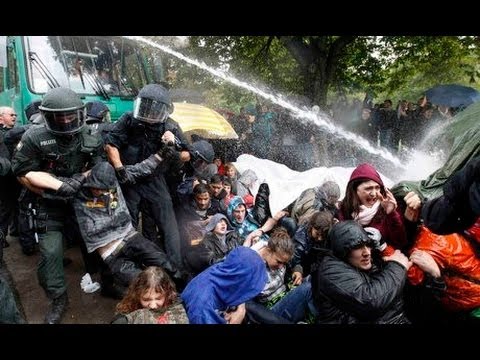
Parents and children attempting to register in the primary school
(source: youtube)
1. The women are forced to go through a rigorous process of scrutiny before presenting for adjudication in front of an expert panel
2. The two-dimensional portrayal of women as a homogenous group devoid of all complexities in a bid to uphold the official pageantry
3. There’s usually an irrepressible man dressed in black and white dominating the airwaves with displays of parochial eejitry
4. Frequent cries about the need to “protect our values and our culture” , and the incurable propensity towards propping up long-expired representations of the past
5. It doesn’t exist anywhere else in the world
So ran the headline on an opinion piece by Barbara Scully yesterday in response to the ‘news’ that Yvonne Connolly had legally shed her Keating title three years following the split from her husband, Ronan Keating.
One can only speculate, but some practices are demonstrably more personal than political. Just as she chose to change her name originally, the pursuit of gender equality is unlikely to have been the sole motivator in changing it back now, if at all. But sparked a public debate, it did. The ensuing clash of on-line opinions ranged from head-scratching mystification at the thought of ever changing a name; tossing about comprises and re-configurations informed by pragmatism and family practicalities, to the merits of blokes changing theirs. Romance featured in there somewhere, back in the early heady days. Overall, it’s a topic that tends to animate a few folk.
“I got married, not adopted. Of COURSE I didn’t take his name”
This is a common refrain among the particularly shrill participants in the debate. As an exercise in dabbling in logic, it’s impressive. Great strides in comprehension demonstrated there. As a statement with the potential to provoke a beating with a beetroot encrusted kipper, it’s irresistible.
Of course, the commentary wasn’t directed at Yvonne Connolly personally, and like any cultural practice, name-changing should not be immune to some form of periodic collective scrutiny and the obligatory on-line kicking. But horror and high octane gasps veer dangerously close to being as out-dated and inflexible as the charges laid against it.
Citing Iceland’s no-nonsense standardised name-changing traditions, Scully interprets it as an influencing factor in the country emerging as the most gender-balanced nation in the world according to The World Economic Forum Gender Gap Report. The corollary being that if Ireland were to take a similarly uniform approach, greater strides would be made in achieving the elusive goals of gender equality. Presumably, Scully, though she doesn’t elaborate on it, is being more considered than this over-simplification.
It’s not unreasonable to suggest the potential that dropping the habit would have in helping diminish inherited sexist attitudes and erode the disproportionate grip domestic life has on women’s identity, however subtly (or not) these are currently played out. How much is another question. The complexity of cultural norms is such that it would require a longitudinal study in attitudes to capture its impact, and few need more than a basic grasp of economics and politics to understand that equality in Nordic countries hinges on a little more than stringent naming traditions, or whether your fella volunteers to change his. As a weapon to combat sexism and equip women with the confidence and ability to invade the legislative arena, it would be foolish to over-state its reach. It also, worryingly, despite thumbs up to Icelandic and Canadian law, invites an over-reaching arm of the State to meddle in the private affairs of its citizens.
Furthermore, there is the implication that women bear the responsibility for promoting changes in equality, and opting to change their names runs counter to the overarching feminist cause. The one for which there is no actual consensus.
Is that not a little outdated in the *thinks for second* 21st century? Interpreting ‘traditional’ rituals in a contemporary context and soldering a neat link with inequality fails to stack up. Take that logic to its conclusion and we see women who have no-one to blame but themselves. With all the subtlety of a brick, many critics of name-changing view the practice as a direct attack on feminism. By feminists! So they can’t be feminists! Can they?
Well, of course they bloody well can.
The history of feminism is fairly static and indisputable, but the context of it is in a perpetual state of flux. Rifling through issues and holding them up for a good sniffing to reject or accept doesn’t undermine women’s appreciation or recognition of the battle that paved the way for strides in gender equality. But not every contemporary personal decision is a direct action against progressive political policy.
Women aren’t any less equal because they have chosen to change their name, or because they haven’t chosen to abandon ritualistic traditions associated with the wedding ceremony. We live in a Western World where women enjoy the freedom to make choices on which traditions they want to pick and choose, and attach their own personal meanings to them in the process. When it comes to name-changing, one person’s political meaning can’t be superimposed on the personal view of another. These simplistic arguments only serve to debase the meaningful fight for equality.
There’s a striking similarity between what these critics assert, and the claims put forward by more radical elements within feminism. The hyper surety of the dominant force of one innate characteristic, and its apparent ability to undermine all others. That to be truly feminist, women most embody all aspects of feminism, all of the time. How exhausting would that be? You can’t wear a white wedding dress, and fight for equal pay; you can’t freely enjoy traditional expressions of femininity, and attack the exploitation of women’s bodies; you can’t be well-off, and speak out against injustice; you can’t be white, and object to the racist sexism against black women.
You can’t be a Ms. Whatever feminist or a Mrs Whatever-Whatever feminist without signing up to the principles of equality; no more than you can’t be a onesie-wearing make-up free feminist without doing the same. As an argument, it has more aggression than logic, and ignores the fact that is it perfectly acceptable for women to reject absolutisms on issues appropriated by feminism. Issues that have a bearing on their own lives, to be adjudicated on privately. It doesn’t undermine their commitment to equality to do so, or the right of other women to do different. It didn’t prevent me from not changing my name.
The rights of women in Western Europe and those in more conservative and unequal societies are not mutually exclusive. Participation in traditional wedding rituals is not indicative of the subservient conditions women live in; inequality, poverty and social exclusion is. Domestic violence, misogyny and unequal pay transcend naming-practices. Individual women, as women, as feminists, as advocates of equality, as cheese addicts, as name-changers, as Bono-bashers, as dishevelled Wurzel Gummage lookalikes, are not duty bound to carry and exhibit all the apparent tasks of feminism all of the time, or prove their integrity by discarding name changing. Integrity trumps all labels and snooty dismissals of fairly benign practices.
Practically, I get the quiet life appeal of integrated names, but not having experienced any pressure to conform, the thought of changing it never occurred to me. As the bearer of an already inconvenient polysyllabic name, I’m often met with officials’ urgent need to know if I go by it. Well, I often get wench and gobshite, but generally yes. I was delighted when all the Eastern Europeans showed up, and those delightful Africans with their penchant for intricate naming traditions that renders each family member with a different surname. They would give Iceland a run for their newly minted money any day of the week, but they would also give us all a lesson in the dangers of holding too much stock in the correlation between non-patriarchal name-changing and growth in gender equality. That’s probably in The World Economic Forum Gender Gap Report, too. Only in more sober language.

The first time was irritating; the second plain galling; the third a near successful attempt to tip themselves over into an induced state of apoplexy.
I am, of course, talking about the latest spate of attacks directed towards the NGO and charity sectors from prominent anti-marriage equality campaigners. Wilfully dismissing children’s charities as mere bodies conveniently “cosying up to the government that funds them” indicates not just a lack of understanding of the critical function these organisations play, or a reminder of the glaring immaturity at the heart of our democracy, but an obscene attack on the fundamental principles of that democracy.
That these attacks are so casually and overtly made, suggests that those who make them labour under the misconception that charities occupy a narrow paternalistic role in which their work should only be seen on a collection bucket but not heard. Engagement of charities in the debate is clearly indicative of a cynical self-serving move to protect their interests, and a blatant trespassing into territories of the debate where they have no business straying. An unapproved challenge to the assumptions on the family by no campaigners from a sector whose credibility must be called into question. Not questioned, dismissed outright while ignoring the substantive points they make.
In promoting the notion of a democratic society, members of the anti-marriage equality campaign are at pains to remind their opponents of their fundamental right to freedom of speech. In upholding this right, they forget that it is society in all its diversity that must be facilitated to participate, if democracy is to be successful, irrespective of the implications for the official state. It is why the development of mechanisms for participation of civil society through NGOs and charity organisations occupies a cornerstone of any functioning democracy.
Article 19 of the Universal Declaration of Human Rights states:
“Everyone has the right to freedom of opinion and expression, this fight includes the freedom to hold opinion and to seek, receive, and impart information and ideas through media and regardless of frontiers”.
Such declarations are driven by the need for civil participation, and the recognition that the evolution of a civil society, and the flows of unregulated information to citizens, cannot be left to legislators and governments alone. To that end, the proliferation and sustainability of NGOs and charities was essential, and their participation in public debate a necessity.
Historically in Ireland, these frontiers included the Catholic Church with support from a sizeable conservative fan-base (namely the State), whose firm grip on the channels of information left an indelible imprint.
In recent decades, a number of grassroots organisations have entered the public discourse with a variety of objectives under the common aim of seeking to represent and promote the rights and concerns of groups of citizens who have frequently been forgotten about in both politics and the media. There is no single centre of state power in any contemporary society. Or rather, there shouldn’t be. Sustaining the NGO and charity sectors ensures power is diffuse and dispersed through civil society. Or rather, it should be. The sector met this challenge with an impressive legacy of work already achieved over a relatively short period, and continues to do so despite relentless cuts to their income.
Without NGOs and charities in Ireland, there would have been no formidable challenge to the State and Church to acknowledge and address the abuse of children and the subsequent inquiries; there would have been no apology from the Pope for the wrongs perpetrated against the innocent children; there would have been no legislation developed to put in place mechanisms to prevent it from ever occurring on such a scale again; there would have been no support to the victims and survivors or eventual recourse to legal action against the perpetrators that stole their childhood and too many of their adulthoods; there would have been no support to single parents shunned and silenced by stigma to help give them a voice and advocate for the services and support required to give their children some semblance of a decent quality of life; there would be few family learning projects that foster healthy relationships between parents and children, and promote learning in the home; there would be more acute social isolation in housing estates thoughtlessly and greedily erected without any consideration given to the play and developmental needs of children or the mental health of their parents; there would be few Traveller children in receipt of voluntary out-of-hours learning to enable them to progress in a mainstream education system that continues to fail them.
The centrality of safeguarding the welfare of children in work undertaken by charities, and their commitment to giving children a voice, speaks for itself.
It is in this context that we are left in little doubt as to the integrity and independence of charities; and reminded of the obligation of the state to distribute the money that belongs to all citizens in common through those mechanisms that work our behalf to improve the lives of children, including those of no-campaigning parents. Certain commentators appear to have deliberately mistaken state responsibility for discretionary hand-outs. Without Europe etc. etc…
In recent years, the sector has suffered the most catastrophic cuts at a time when their services are most heavily depended on. Casualties include the Combat Poverty Agency, The National Consultative Committee on Racism and Interculturalism, various family support programmes; domestic violence services, and the well-documented Childline, among others.
Those competing for shrinking funds do so at the mercy of the most sophisticated performance management systems befitting private corporations in exchange for a fraction of the budget of public sector organisations. It is testament to their resilience they continue to produce robust evidence based research and findings from international best practice learning on the effect of same-sex parenting on children that can withstand an unmerciful kicking. That is not to suggest the sector is without flaws or faults; it is a mixed ability group with as many wasted and rusted halos as any other; but to question their credibility and independence in this debate is to make a mockery of the social justice for which they stand, and display an ignorance that ultimately undermines their own purported sincerity.
In a climate of consistent and relative poverty, against the background of intensifying austerity gnawing at the basic needs of the most vulnerable families, one would expect defenders of the rights and well-being of children to support these charities to raise their voice and sustain their services. Instead we are given mean-spirited curled-lipped dismissals in an attempt to discredit the one sector willing to put its dwindling money where the poor children’s mouths are.
Shame on them.
“I think we need to dismantle the relationship between Church and State. We can’t have an equal society when the State is funding 90 per cent of schools to indoctrinate their pupils in the Catholic faith. I don’t think Catholicism is compatible with feminism. We need to get the Church out of the school system, but out of our hospitals as well.”
So says feminist writer, Emer O’Toole, in an interview with Anne Sexton in the latest edition of Hot Press on her new book Girls Will Be Girls. As a succinct statement that’s familiar to most of us but not particularly radical, it works fine. As a basis for a national aspiration informing a future referendum, why not? It works perfectly from where I’m sitting. Well, slightly hunched.
But…but..
My fantasy doesn’t end there. The referendum takes place in 2016 to coincide with the centenary of the Church’s crossing of the national threshold to all-encompassing power.
But..but.. what about parental choice?
My fantasy doesn’t end there. Campaigners will invoke the original aspiration of a Republic that cherishes all its citizens equally and the fight to safeguard equality of access to education. Including the ‘minority’ of us.
But..but.. what about the census figures?
My fantasy doesn’t end there. Practitioners of the faith will not be banned from continuing to practice that faith. There will be a few possible nixers up for grabs through a Sunday school type initiative, if families are keen on collective instruction. Catholicism won’t be ignored in the classroom. Consideration will be given to its place in the market place of religious ideas and world religions. And confirmation outfits will be positively welcomed during the 6th class coming of age graduation ceremony. All’s not lost.
But..but.. what about the legalities and autonomy of boards of management?
My fantasy doesn’t end there. Irish people are proving themselves to be committed to equality and inclusiveness, so I anticipate consistent commitment to same through vociferous arguments in favour of children having access to education. Equality 2016 has a certain ring to it. I can see blogs and banners festooned with these badges.
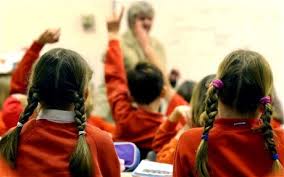
“Excuse me, Miss, why is my friend not allowed to come to our school?”
But..but..
My fantasy doesn’t end there. Emer O’Toole also had something to say about our national whataboutery. “Most people will agree with social justice up to a point, but as soon as it seems that real equality will be achieved, the more right-wing elements will claim you’ve gone too far, that oppressors have become the oppressed.”
But I’ve more faith in Irish people than that. I know we can rely on our Catholic parents and neighbours to do the right thing when the time comes. They will keep their chants going; their voices raised; their protest against the misplaced dominance of clerical authority in focus; their social media campaigns strong.
One fight coming up, many more to go.
Fantasy referenda – feel free to add your own…
If I were in charge (any day now), there would be a designated happiness month. Forget this one day carry-on. I would suspend the current curriculum in schools and dedicate it to free expression, dancing, trips to all the inaccessible stunning parts of the Island, and have guests from the worlds of everything. From bee-keepers to thatchers, fishermen to comedians, star-gazers to asylum seekers, poets to philosophers, the film censor, self-exiled emigrants, and librarians to talk on all the great Irish works that were censored down the decades and why. Afternoons would be taken up with unfettered consideration to top fives spanning a bottomless ocean of random topics. Starting with films, albums, and books.. to whet the appetite.
Religion would be decreed a private endeavour, and its allotted spot given over to absorbing the unsanitised myths and legends of our Land. Balor and his Evil Eye would slug it out with Lugh and other irredendist gods in outdoor re-enactments. Though rest assured no children or animals would be harmed. The odd teacher might risk being collateral damage, but there would be mead and goblets. Other sporting activities would include pin the grenade on the John Charles McQuaid Poster, and tug o’war with a Curly Wurly.
Women in all their glorious diversity would take over the Dáil where free reign would be awarded on passing legislation to be invoked during each and every subsequent month of happiness thereafter. Women without prior access to the internet or the airwaves would flashmob RTÉ, politely asking Sharon Ni Bheolain to hop it; and someone from deepest Dundalk would read the news. Their revised version of it. Someone else would check if Bryan Dobson’s hair is real.
Iona would return to being a place vaguely associated with one of those saints whose name you can’t remember just now.
Theatres, galleries, gigs and gourmet hangouts would serve only those on the minimum wage or below. All prices slashed to proportional donations at the customer’s discretion. They would also take over take over the programming and menu design.
The word Republican would be reclaimed from the clutches of constituency-protecting revisionists on either side of the amnesia divide, and decreed illegal to be used in any other context than its original definition. Ditto the Irish language.
Northern commentators would, at last, be permitted to enter the other sacred citadel of Official Ireland (RTÉ) for a criminally overdue series of discussions on The North. This might help inform those who have the least understanding of the place, despite being closest to it, while selectively caring about its ‘victims’ whenever it conveniently suits. These would include: Fionnuala O’Connor, Nell, Eamonn McCann, Susan McKay, Alex Kane, Bernadette Devlin, Monica McWilliams, Denis Bradley and Dawn Purvis. While Eamonn McCann is there, it would be an opportune time to haul in Bono for a less disingenuous discussion on the Meaning of Life for those he purports to represent. He might even get to meet some of them.
The ubiquitous two-hander of O’Callaghan and Byrne, would be banned. Dearbhail McDonald would be booked for the season. Facebook and Twitter would be suspended.
Driving below 60mph between 8-9am & 5-6pm on main roads at weekdays would incur a fine. A siren would go off inside every car dipping below the mandatory speed and Enya would come howling through the speakers at top tonsil.
Ivor Browne would read the emotional weather nightly, providing tips and assurances as he goes. Jean Byrne would be fitted with a Jean-cam for a month with live coverage on her own dedicated round-the-clock channel.
Stevie Wonder would be played on the streets and every day would be a no uniform one. Churches would fling open their doors for open mic nights, and a box of Tayto would be sent to every household.
Only bin-collectors, taxi drivers, and drive-by fast food operatives would verify photos on passport applications. It would be preferable if there were called Mary or Bridget.
Jinx Lennon would do the voice-over for a new Dastardly cartoon. Shane MacGowan would do the honours as Mutley.
Everyone would play a gigantic game of freeze! as the bells of the Angelus strike at 6pm. This would be followed by a reading from St. Prince to the Carinthians on rotation from national television and radio channels on rotation from enthusiasm ministers volunteering round the 32 counties.
I’d be happy then.
And now, a reading from St. Prince…
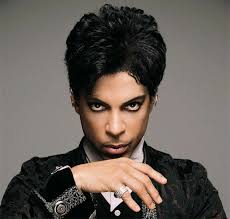
Dearly beloved
We are gathered here today
2 get through this thing called life
Electric word life
It means forever and that’s a mighty long time
But I’m here 2 tell u
There’s something else
The afterworld
A world of never ending happiness
U can always see the sun, day or night
So when u call up that shrink in Beverly Hills
U know the one – Dr Everything’ll Be Alright
Instead of asking him how much of your time is left
Ask him how much of your mind, baby
‘Cuz in this life
Things are much harder than in the afterworld
In this life
You’re on your own
And if de-elevator tries 2 bring u down
Go crazy – punch a higher floor
This is the word of the Lord
We’ll take a few moments now to pray for our own personal happiness intentions…
 department of speculation