This woman’s work

Work eh. Who’d be bothered. And don’t give me that women-can-do-anything routine with a tampon ad voiceover quality to your enthusiasm. That’s all fine and dandy until you hit your forties when you just want to put your feet up and whinge about what you could’ve been if only you had gotten off your arse on time. But as a mother (not merely a lowly ‘parent’) to a female member of the species, I’m morally contracted to keep up this Lean In On Me routine till she finds out about the ways of world for herself. (Future awkward conversations.. “Well, you fell for Santa, and the Tooth Fairy, and *scratches back of head* I just sort of lost of the run of myself after that. You did drink milk from those things lying at my feet though.”)

I’m not allowed to admit to anyone that I hope she gives university a wide berth unless she’s planning on becoming an astrophysicist, or enters well after she’s left her teens behind her. I once shared a house with an astrophysicist and distinctly remember indignantly remarking “I don’t remember seeing that on the prospectus” as if the sector was robbed of my scientific genius. That was after he regaled me with tales of chasing brown dwarfs around space, and before one of my mates chimed in to ask if he could read star signs.

Some other things not in the prospectus I hope she discovers…

  • A healthy scepticism towards third-level education: whether it’s the only route available to what she wants to do with her life, while recognising the value and privilege of education for its own sake; not just a route to work, or an entitlement to work based solely on it. Graduates are a mixed ability group like any other. Look around your office. Actually, just look at your management.
  • Be suspicious of folk who define themselves by the letters trailing their name. They haven’t done enough waitressing to know what a knob they sound like, or what the application of ‘interpersonal skills’ really means.
  • Wanting to do something ordinary is OK. That’s what the majority folk end up being as they contend with modern life. Except those people who make the buns in our local bakery, and Enya. But if doing battle with the piped cream, or wandering round naked in a field on the grounds of a castle howling at the moon isn’t her thing, that’s OK. Every modest job contributes to making our world spin.
  • She doesn’t have to fly to the moon, gesticulate weirdly in an ill-fitting power suit in a boardroom; cream her knickers discussing Sheryl Sandberg at her book club, or facilitate unethical financial transactions over obscenely priced lunches with people looking rougher than the photo accompanying their inflated Linkedn profiles, to break the gender mould. She can also build beautiful walls, thatch cottages, repair car engines, or be a real hero and fix washing machines. Plumbers are the unrecognised feminists of this world after all. The world will always need plumbers. Most jobs with an element of manual labour are extraordinary.
  • A job is not guaranteed for life. Anyone with that expectation is divorced from the real world.
  • If it all goes to shit and she needs to bow out of the mainstream workforce for whatever reason – that’s OK. Generations before her fought hard for workers’ rights. The right to sick pay, the right to get well. The right not be ashamed for being human.
  • Chances are everyone is under some degree of stress. Comparing your own work stresses to others is futile and, if you’re a teacher, will only win you a few headbutts. Remember that in the modern age, the union representative is the message. And most sectors of hardworking people don’t have a union to negotiate conditions or fight with Matt Cooper on Thursday evenings while she wonders what’s in the fridge for dinner.
  • Not to worry if she’s exhausted by the ‘professional’ persona she strives to cultivate or the bizarre ‘professional’ persona of others that appears at odds with their regular personalities. Work is all about suspending disbelief and leaving your normal personality at the door. Just remember to pick it up on the way out.
  • Life isn’t fair and until there is a universal definition of what constitutes worthy work, the wealth from work will continue to be distributed unevenly, with or without an education.
  • The composition of discussion panels in the media regarding the status of women in the workplace is usually skewed in favour of middle class women and their corresponding problems. Valid and relevant though they are, and she might well be one of them, if she filters the same problems through a person with half the wage, and a quarter of the opportunities, it’ll aid perspective.
  • Email read receipts are unnecessary and the scourge of the instant gratification generation. Ignore them.
  • That reminds me. Folk who will pride themselves in pointing out her grammar or spelling mistakes are just working through their feelings of guilt  and shame around masturbation.
  • It’s only work.

wall

A barrier to women in the workplace

Gaol bird

Time to crack open the Football Special. Word has reached me here at the dungeon that the original punk angel herself, Patti Smith, will play Kilmainham in Dublin this June. Not only that, it’ll be a run through of her enduring debut album, Horses.

Remember those spooky pictures of J.C. and his Sacred Heart appearing as a flickering red torch shoved under his chin like he was regaling the apostles with some top ghost stories? A relic from a time when it was essential armour of any self-respecting household defending itself from someone looking in or looking down doubting its inhabitants were anything but good stock. Well, we didn’t have one, so I would see how far the gaze from a singer on an album cover could follow me round the room instead. Album covers adorned with secular Gods presiding over standards of household rebelliousness and cultural credibility.

One such cover that made a lasting impression was Cliff Richard this slender framed dame with her vest on inside out. One has to join the rebellion somewhere. And she probably went out without a coat. By the way, wearing your Father’s suit to demonstrably prove your devotion to Talking Heads doesn’t make you rebellious. It makes you a plonker. And I should know. But I digress.

Patti Smith

She should have some good luck for that, with any luck.

So, it was Patti Smith Group’s Easter LP that paved the way towards impenetrable poetry I pretended to understand and an introduction to celebrated androgyny and all its corresponding mysteries I hadn’t the vocabulary to share but intuited somehow. Much like the way I used to well-up to the litany of Phil Collins’s weepy routines without ever having had my heart tampered with In Real Life by then. These mysteries orbit the instincts from the time you’re a nipper.

As for Horses, the cover will never look the same after reading her memoir Just Kids, which illuminated the corners of her inspiration, her daily life during those early heady days of misadventure, and the origins of the iconic imagery that went disc-in-sleeve with the goods.

The prospect of hearing the revered heavy weights (Gloria, Land, the title track) is not without tantalising tingles; but I expect to have all hairs standing to attention by the time the quiet piano notes open the lid on track four.

Free Money: from soft vocal wishing what could only be, to pulsating punk whoops of declarations of what would be if her lottery ticket came in; all while giving a downpour of drums a run for their money in three glorious minutes and fifty-two seconds. Take it away there, Patti..

https://www.youtube.com/watch?v=-3V1rNEmbRo

Nanny state

Not for the first time I pulled away from our one’s childminder’s, relieved she doesn’t require a degree to do what she does so brilliantly. Not for the first time I handed her cash, struggling to square the sums with the sum total of responsibilities, energy and capabilities involved in her job. Not for the first time do I join the chorus of my peers demanding more imaginative, equitable and accessible childcare support policies that account for the diversity of family support needs and the right to corresponding choices.

Not for the last time will I wince when I hear care of those two and under couched in the narrative of ‘early years education’. Not for the last time will I feel slightly nauseous at the rise of the persistent framing of this stage of life within the notion of a formalised educational framework. Not for the last time will I head-scratchingly despair at the subtle expansion of the uniformity of this language to legitimise this pathway as the only available route to validating the skills of childcare workers; or the panacea for inadequate recompense from the state for their contribution to the economy and future lives of our youngest citizens.

Not for the sake of politeness do I show a keen interest in the continuing professional training our childminder is required to undertake to keep pace with good practice and the evolution of standardised care of children. Or the on-going regulations she is subject to. These are critical. Not for the want of devaluing her brilliance do I know it unlikely that she would have been able to access third level education were it a requirement when starting out. Or in the future. Not for the want of deliberately failing to recognise the value of education do I hope this gallop towards third level childcare courses slows down. And catches itself on.

Not for the want of being unsupportive of others choices do I bristle when I hear soundbite after soundbite about the ‘need’ for childcare to be treated exactly like education. Not with any grand teaching insights am I unwavering in my belief that there is surely a cocktail of ways of regulating and elevating early years care in the hierarchy of valuable work without it being subsumed into mainstream education. Our six-month old didn’t need a curriculum, if she enjoyed one by a less formal name. Same when she was a year. And eighteen months. She’ll be in it long enough. Some would say unfortunately. Including me.

Not for the belief that I think I’m right do I feel calls for investment into services only is a slippery slope towards shutting down the variety of childcare options that the diversity of families rely on. Not through any certainty that their voices are less valid do I wish for the validity and legitimacy of all choices to be taken on board and safeguarded.

Not, if we were never to see her again after our one moves on, will we be anything but grateful for the love, care, capability, enthusiasm, intuition, warmth, and empathy our childminder had for her while in her care. Our choice was based mostly on chemistry, backed up by recommendation. Letters after her name would never confer any of these talents on her, and certainly won’t guarantee better terms and conditions, as workers in various other caring and community sectors who require them can attest. And as the latter unfortunately know all too well – there is no utopia in sight where jobs are guaranteed on the basis of the assumed worthiness of the work, and the best learning and skills don’t come from a lecture theatre only. Those who enter it exclusively for purposes of compensation from changing family circumstances, or the need to diversify to fit with family circumstances, are in for this rude awakening.

Chasing postcodes

Back in the boom (shake shake the room), Ardal O’Hanlon quipped the arrival of Eastern European communities meant Irish people could finally use the WXYZ sections of their address books. Too late for the tattered book in my parents’ house. You know the one; every household has one. Ours is usually sandwiched between the latest regional phone directory and an envelope bulging with memorial cards passed on from grieving friends and relatives down the years. That dog-eared antique had barely margins available by the millennium, and now doubles up as a whistle-stop tour of the lives of the off-spring.

It’s no coincidence the only numbers scribbled in the back pages next to a ream of scored-through dodgy addresses (up-and-coming actually *flings nose in air*) include: Western Union, PPS numbers, NI numbers, bank accounts, and the numbers of payphones on many a draughty landing. There’s also the number of the local pizza delivery service. Emergency information, in short.

All of page X and most of Y (why? indeed) are taken up with a string of residential dots that join up to my current cell, while one brother squats all over Z. It’s no coincidence either that the more ..shall we say.. solvent..siblings have barely a page between them. Losers. But enough of this exploitation of any opportunity to project my personal failings on to them.

This week’s form-filling tasks involved listing my previous addresses stretching back over various criminally dodgy hair-dos. The final tally came in at well above twenty. Barring the mothership, I’ve been in the current one the longest. It’s no coincidence I’m…etc. etc.

I couldn’t remember if that flat where the crazy Spaniard cut up my beloved Rocketdogs in an impressive act of revenge was number 27 or 29. There was that street I remember because it sounded like vulva, and I still have occasional flashbacks of my first bedsit in Grosvenor Square. Nasty ones that feature woeful attempts at flirting with the professional cameraman who lived upstairs (“Oh, I like photography, too”), and almost killing my landlady who lived in the basement flat with my amateur DIY skills. Yikes.

Turning the corner into our road last week, I spotted the giveaway signs of another house I lived in three doors down even though I’ve never set foot in it. The living room blind hangs at half-mast as a mark of respect to the new arrival, nodding to day-light to come in but go easy. The blanket-draped handle of the pram the only visible sign of life.

Late at night, the dim glow from the corner of the upstairs window is barely noticeable. In the mornings, I occasionally pass the same midwife who ordered our blind up, our heating down, and straddled me on my own bed with a nipple protector. Glancing in my rear-view I see her pull up at their driveway.

I’ve heard of people returning to their former home-places unannounced because they happened to be in the area and fancied a nose-around. I’ve thought about knocking on the door with the offer of something, but I think we only exchanged hellos once by the milk shelf in the local shop. The thoroughly modern neighbourly relationship that could get you reported for stalking if you smiled.

I wonder what she’s done with the place. Moses basket or crib. Does the double-bill of Frasier herald the transition into normal morning time as she once knew it in between never-ending rounds of toast? If she’s not dressed by noon will she bother her arse getting dressed at all? If she isn’t dressed in another three months, will she make it out the door confidently by six? Who knows what goes on behind closed doors.

fridge

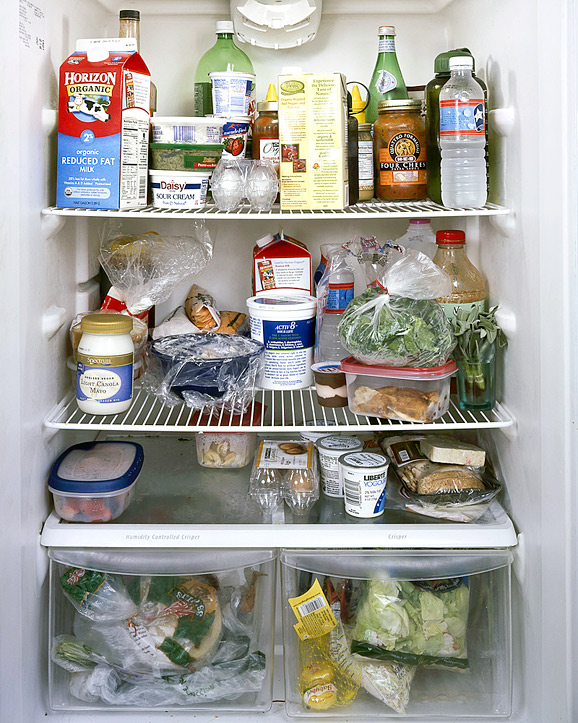
This fridge has no pâté. Quick! Call the parenting line!

Still, I’m curious if her best laid plans include trips to the cinema; whether she has friends and family nearby, and if she wishes everyone would just fuck off and come on over, at exactly the same time. Does she attempt a few selfies with the child for her mates overseas that won’t ever be sent but will actually look not so bad in hindsight. Will her hindsight rely on these photographic artefacts to jog her memory of these early days when she became a fugitive from certainty. Is she wishing she could sleep when her baby does or has she quit trying to grab hold of that mythical lifeline, and taking perverse pleasure in pâté and re-runs of One Born Every Minute by mid-afternoon instead. Does she wonder if she took a shit during labour and suspects everyone present protected her from the truth, or does she not…give a shit.

Might she, one day, a few years from now, recognise a half-hanging blind in a nearby house. Will she mentally push the door open and step inside to check what’s on the telly, anxiously note the room temperature reading, take comfort in the disarray, survey the contents of the cupboards, check the fridge door for photos of the baby’s Da at knee-level. Maybe run her eye over the CD collection to see how the child is likely to turn out. Will she scan the walls of the nursery for an infestation of animal stickers that threaten to bring her out in a rash. Will she baulk at the notion of calling it a nursery. Will she open the wardrobe to a dose of pink clothes that risk giving her diabetes unless she closes it again quickly? Will she at last be able to put a name on the feelings she felt back then and shake her head at the ruthless competition that ensued between them. Will she curse her inability to curate that phase from anything other than the splinters from mislaid memories?

And will she wonder if she’s the only eejit that looks up a house she’s never been in, longing to sit in it for just a little while longer.

An ostentatious show of faith

Ash Wednesday. A day that separates the hardcore practitioners from the casuals. And the casuals from the ones that desperately needed a school place. One has to admire the willingness of the faithful to conduct their day’s business as usual while exhibiting a blob in the shape of Kim Kardashian’s arse on their forehead. Have you ever encountered road rage from such an individual? Me neither, but I’ve a feeling it’d be funny. (“Oh God sorry, do you need an ambulance? How many fingers am I holding up?”). Or maybe not. I might wear my crucifixes lightly (job, location, immediate family, parenthood, cheese habit etc.) but can relate to the arched browed curiosity these parishioners are exposed to nonetheless.

Take that first morning of a new job when I had the uneasy feeling the twenty new pairs of eyes were looking slightly past mine. As if the first-day hyena laughter and the overbearing children’s TV presenter enthusiasm wasn’t wearing enough. Not wanting to interrupt my concentration while reading the riveting company policies, and continue with the show of conscientiousness due to expire the following day, I staved off the need to pee until my non-paid lunch break. A double-take in the mirror and a dreaded close-up revealed the remnants of the face cream I’d applied in the car hovering around the nostril area. Children’s TV presenter enthusiasm indeed.

Still, that was nothing compared to the après ronnie job. I’d been in denial for years. Then, one night, several pints in to a conversation on personal grooming with a mix of mates, I called the discusson to a halt and demanded those present to inspect the ronnie I feared I was carrying around. There was no avoiding The Truth. They all leaned in for a gawk. There followed a slow start to the sheepish yeahs before they were all nodding in unison like they’d been wondering how best to confront me on the matter for years. A resounding yes to getting the ronnie off then, and one for the road.

ronnie

Look carefully. Are you sure you don’t see something?

Heading into work the next morning with a rare five minutes to spare, I slid into the beauticians for a quick wax. Nobody told me my lip would be visible from space for the next hour. I landed into what was a pretty tense meeting with one of the aforementioned mates on the opposing side. I prefer to think I unwittingly disarmed her with my radioactive skin.

Don’t try this at work without getting permission from an adult.

A very short, bland, and cranky post

There’s a video doing the rounds at the minute of a two-year old having a tantrum. The responses range from the predictable viral game of pass-the-parcel in the name of bland entertainment, while the more self-regarding sites have ushered in a few revered talking heads to give some consideration to parental responses to toddler tantrums. Which is all very harmless and right-on and will appeal to the mass parenting reading market. But this curmudgeon is sitting tight with a face on her like a badger’s arse and a curled lip for someone to  “weigh in” on the issue of children’s privacy, specifically their right to privacy on the net, irrespective of their age. Especially because of their age.

As you were.

Both sides now

Rows of bowls of Angel Delight and ice-cream hassle free without care

and warm weather companions everywhere that kept the clouds away.

But now they only sunblock their sons, who reign, and grow on everyone.

So many other things they might’ve done but doubts got in their way.

I’ve looked at your life’s dreams from both sides now, from now and then,

and still somehow it’s life’s hard won victories  I recall.

But I really don’t know your life at all.

Moons and Junes and ferries overseas, the dizzy dancing way that you feel

as every football fairy tale trip comes real; I’ve looked at your passions that way.

But now it’s us putting on the show. You leave ’em laughing as you go

Because you care, you let them know, but never give yourself away.

I’ve looked at your love from both sides now, from give and take,

and still somehow it’s your love’s inclusion I recall.

I really think I know your love most of all.

Here, with fears, but feeling proud, to say “I love you” right out loud,

ice-cream and streamers from the party crowd, I’m looking at your life this way.

And now old friends aren’t making strange, you shake their hands,

they say you haven’t changed.

Some have been lost but some others gained from living life faraway.

I’ve looked at your life from both sides now,

from win and lose, and still somehow

it’s your life’s quiet revolutions I recall.

I’m really beginning to know your life after all. ernie

The morning after…

You will be Bogart and I will be Bacall

A few of my favourite pairings….

Sarah and Sean*. Sarah and I met over a string of work inspired expletives fired from our bellies landing headlong into a plan of action; which I think was dinner in theirs where we overtook all small-talk and parallel parked in to a stare into space over the unbearable likeliness of ending up in the Midlands forever. Munch screams all round. She was just shy of 25 but had already pounded a fair few streets of the globe with her spittle speckled angst before meeting Sean and trying to calm the fuck down. Sean is three-quarters at ease with himself, remembers how you take your coffee, greets you like an old friend, and shares his thoughts freely and humourously. On their wedding day, he stood up, this man of hers, and declared her his rock and best friend with a tear in his eye that threatened to put one in mine. But I pulled myself together for the sake of the children. We all derive a laugh from disclosures about our respective suspected mental health instabilities. You can’t ask for much more than that except another coffee.

Orla and Ben. More friends of a friend but we’ve hatched and grown and watered our own stalk down the years. Their fridge is purple. They had 56 children by their early 30s. They invite people over to help them decorate their Christmas tree in their little house where you leave your clouds at the door and raise a chipped cup to whatever chat is going on, if you don’t have to wash it first. She’s a regular Dub who teaches children how to paint glass and cackles from beneath a head of screaming red hair. He’s a rugby-mad toff who’d shame his double-barrel family with his profanity laden humour. They have their ups and downs but they’re solid, inclusive, and welcoming. Life and its shite is very matter of fact, and they bounce off each other in ways that measure up to double what I figured I’d like with someone given half the chance.

Siobhan and Mark. I had forgotten about them until now – an indication of the seismic shift in mate tectonics. Slipping away from great friends. It’s like the harsh lesson that heady romantic love is not enough, that compatibility depends on so much more. No-one tells you the dynamics between friends will shift or contort themselves in ways that shove a sand dune between you made from ground-down time and distance from the lives you’ve been chipping away at. I couldn’t have wished for a better person than him for her. He sang in a choir when they met and could turn his chat to anything. And I knew he was her one when she held court in the pub, weaving a 360 degree wide-eyed drunken slow motion turn to the Specials’ Ghost Town, while he quietly sipped her in, beaming at her every jerk. Because he gets her, and buzzes off her being herself. Now there are two to visit and another little two to tickle. Yay.

Paul and Brendan. Just when you thought I’d caved into mush and drowned in a silly sea of sentimentality, there’s always these two with a withering quip to knock it out of me. They’ve been together for 10 years. I’ve been friends with Paul for twice that. My fellow list-maker. He helps keep the music fanatic in me resuscitated and doesn’t realise I’m not the fully fledged one I was till a few years back. Everyone finds them difficult. Unconventional. Aloof. Socially awkward. Eccentric. Dry witted to the point of absorbing all the oxygen in the room. Precisely the very reasons I like them.

And finally, my Ma and Da. Not a template for the traditionally happy relationship, and a walking instruction leaflet in how to get a lot wrong; but of all the couples in all the books, in all the stories, in all the films, in all the gin joints, in all the daydreams…the rare tenderness exchanged between these two will kill me most every time.

bogart and bacall

“You won’t forget to put the bins out tonight, will you?”

*Names have been changed to protect the guilty 

Who are your favourite couples? Fictional, friends, or family – take it away there like good blogging brethren…

Party pieces

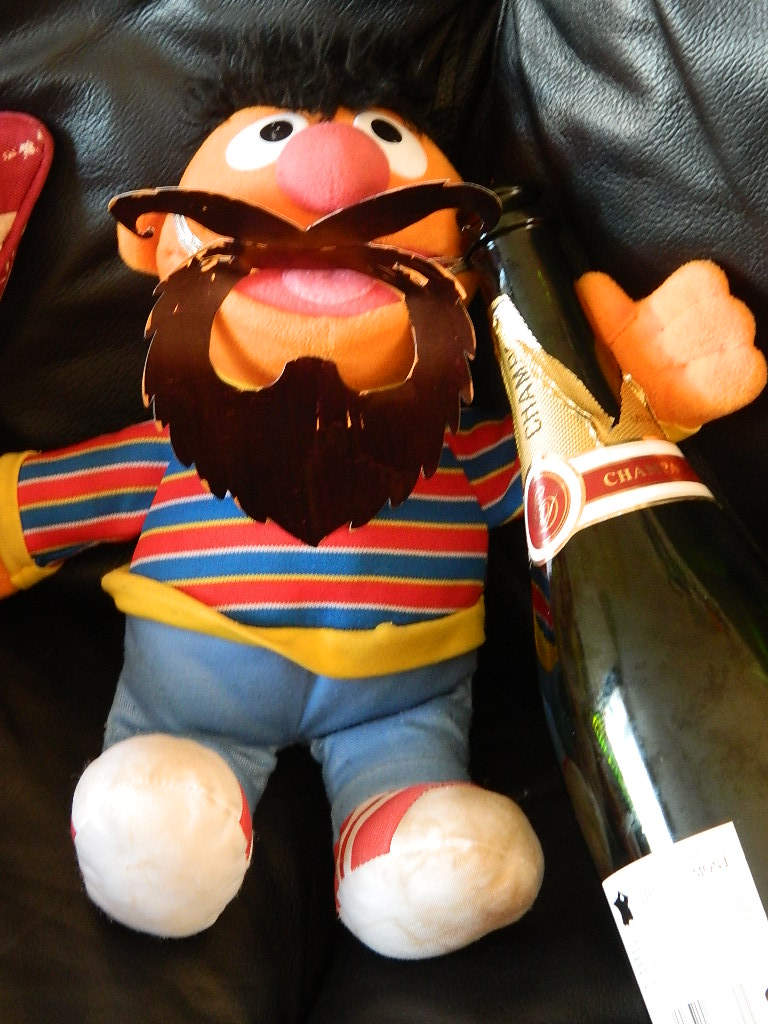
The fake beards just arrived. All thirty-six of them. It seemed like a good idea at the time; that and calling up a load of his mates behind his back to summon them to his ceremonial crossing into the fifth decade next Sunday afternoon.

beard

♫ “For he’s a jolly good fellow..” ♫ 

I say fifth decade, but he’s only forty (Christ. I’d hate to be that age… again). It’s a current favourite of mine to freak people with. Like they didn’t already suspect. I’m annoying like that. I’ve been using it since my mate delighted in reminding me I was technically in my fourth decade when the bells struck thirty. But I already had form when it came to age-related anxiety when I turned 25; specifically the relentless echo from Miss Carr’s maths class (pass, obviously), warning us to round that decimal number off to the next whole number from point five onward. Ah, thirty. I knew you too well.

I say afternoon so it won’t clash with Room to Improve or any other sadistic middle-aged viewing rituals that involve roaring obscenities at the TV like…”how in the name of good fuck did they get the money to do that?”, swiftly followed by “we should invite Dermot round for tea sometime”. Other fantasy guests include: Ross Noble, Will Hanafin, and David McSavage. Besides, it’s the only time people can’t make up shit about not being able to find a baby-sitter (the real reason for having children). And I find all parents’ ability to conduct a conversation slowly grinds to a halt by early evening, after which time I’ve heard enough about what Sophia did at creche, or in the frozen food aisle in Tesco,  or with Mummy and Daddy’s condom stash, or wherever. Fascinating. And it’s the slot he’ll least expect a party to be sprung on him. Insert dirty Muttley laugh here.

Trying to organise a wedding you never had vicariously through a surprise birthday party is at once immensely pleasurable and painful. Pleasurable for seeing him strain to conceal the sad dejected face he didn’t realise he had when he initially warned me (rather forthrightly, I feel) not to make a fuss. It took just one bluff suggestion of ‘early bird meal’ for the martyr mask to slip. “Oh, right”. Was there ever a more loaded expression? In another double-bluff victory for fake authenticity, I’m lining up a little weaner size of a cake from the bargain shelf of M&S for the fridge the previous evening *blows fingers, buffs lapels*. No, really *hand up* I love all my work even without your admiration.

I’ve also managed to share the pain from the process between us by doing that annoying thing of absentmindedly starting a sentence before dismissing it as quickly with a “oh, nothing”. Examples include..

1. “That…[blank]…oh nothing”

2. “Christ…[blank]..oh nothing”

3. “I wonder…[blank]..oh nothing”

4. “You should…[blank]..oh nothing”

Answers to these blanks at the bottom of this page.

Meanwhile, I’m going to have to resist all urges to break open the beards. At three in the morning the idea was hatched, it didn’t occur to me that I would have to provide a rationale to his Mother and others as to why they should wear them. And “Je suis *insert his name here*” doesn’t seem all that funny now.

But fuck it. It’ll be grand. Nothing can possibly go wrong.

Answers:

pǝɹǝpɹo ǝʌ,I ǝʞɐɔ ǝɥʇ ǝǝs ˙ㄣ
ʎɐpunS uo ɥɔǝǝds ɐ ǝʞɐɯ puɐ lɐuoᴉʇoɯǝ llɐ ʇǝƃ llᴉʍ pɐp ɹnoʎ ɟᴉ ˙Ɛ
¿ɥǝ ‘pɹᴉǝʍ ʇᴉq ɐ sᴉ sɹnoʎ ɟo puǝᴉɹɟ ssᴉʍS ʇɐɥʇ ˙ᄅ
ƃuᴉʞooq dnoɹƃ ɐ ɹoɟ lɐǝp ʇɐǝɹƃ ɐ sǝop ʇuɐɹnɐʇsǝɹ ˙Ɩ

The let down

Torch-bearers for breastfeeding are faced with the delicate act of balancing passion with purpose. Comparatively lower figures of breastfeeding in Ireland and the UK are frequently lamented and chin-stroked over. Likely reasons for these low rates are cited and fitted out with several column inches, more often than not by veterans of the game. And why not? No point drafting in a vegetarian to discuss the merits of a meat based diet.

Even so, I wonder about the quality of the debate on breastfeeding in this country in general. It is currently freighted with a lot of unequivocal assumptions that often transcend both purpose and passion. There is a tendency for the prevailing discussion to be fairly restrictive and pre-occupied with telling us what we already know, with the orthodoxy on the purported benefits going largely unchallenged.

The historical and cultural factors are probably a given at this stage, and we live in a world where women’s access to information (by choice or by thrust upon us) is unprecedented. Irish women aren’t beyond the reach of reason or reality of comparative scenarios elsewhere.

There is the over-arching assumption that if only women had more access to support, exposure to breastfeeding, and a better understanding of the “gift” of breast-milk, the current trends would be reversed. Mention is frequently made of the hangover of religious prudishness and so on. These are all valid concerns, and would undoubtedly lead to a more supportive environment, if eroded.

Few women, if anyone, would disagree with the underlying factors that contribute to historically low rates, but in making the case for the need for better support, and individual resilience, a more rounded and open discussion is required.

If the purpose of engaging in the debate is to facilitate the uptake of breastfeeding, then exposing the deficits in medical and community support, labour management, and calling out hostile societal attitudes is fair game. So too is speaking from an impassioned place of positive experience that too often competes with negativity on the airwaves of anecdotes.

However, openly making a judgement on the ability of women to currently withstand (or not) perceived pressures to give up is not. Nor is chalking low levels up exclusively to a culture of giving up. I’ve no doubt this is the case for some women, but not all, because I personally don’t identify with such a neat argument. Nor is over-stating the harm of formula and the far reaching benefits of breast-milk.

In walking this precarious trapeze, Zoe Williams of The Guardian comes closest to striking the balance for me.

“I could not have loved breastfeeding more if I’d been brainwashed; I experienced it as a kind of hallucinogenic experience. A bit like taking an E.

But I also had the strong suspicion that the claims made for its benefits – the higher IQ, the protection against obesity, the superior bonding, the warding off of disease both now and for ever, both for baby and for mother – were mostly bogus. A lot of the reasoning seemed syllogistic (babies born into low-income families end up fatter; low-income mothers breastfeed less than high-income mothers; therefore breastfeeding prevents obesity) or frankly lame. I knew a lot of mothers who formula fed; they didn’t seem to love their babies less. When I wrote a book about pregnancy, I included some of this lameness, while underlining the fact that, speaking for myself, I didn’t care whether or not the health benefits were real, I’d do it again even if it made the baby’s IQ go down.”

A year later, Williams attended a conference on infant feeding, which included a presentation from American academic, Joan B Wolf, who conducted a rigorous, close-range examination of the science behind pro-breastfeeding advice. She concluded the case for breast milk is hyperbolic. For more on this and other challenges of measuring benefits, and the questioning of current medical and scientific orthodoxy, see here.

We also live in a world where women are contending with busy lives and self-preservation comes in many guises. I know many women equipped with all the necessary knowledge who chose not to breastfeed, or gave up, for reasons concerned with vanity, convenience, mental health and so on. Each as legitimate as the other. We can assume that many women do not continue with breastfeeding due to frustration, lack of support etc., but I suspect that is not the full picture and until such time as the issue is unpicked more thoroughly, and credibly, the current cul-de-sac of chat will leave the majority (I jest) of us a little unsatisfied.

A rigorous discussion on attitudes and perceptions to breast-feeding in Ireland should address issues concerning entitlement, biases inherent within the health system and corresponding intimidation, the perception of breastfeeding as being a predominantly middle-class activity (having at one time in Ireland been associated with poverty), lack of support, affordability of resources, and the right to private choice versus the pressure from public health policy. Women need ownership of the discussion as much at the activity, but large swathes of them are missing. Advocates can’t presume to speak on their behalf, so an in-depth study in Ireland would be useful. And timely.

As Williams states: “In order for breastfeeding to have the no-alternative, liquid-gold status it enjoys in public health, its benefits would have to be so much more pronounced and demonstrable that you wouldn’t even need to demonstrate them. Furthermore, breastfeeding activists (or lactivists) shouldn’t have to borrow risk factors from the developing world to make mothers in Eastleigh feel breast milk is the only safe foodstuff for their children. …And maybe, for the public health effect the establishment is after, the inflexible approach is the right one, since it definitely keeps mothers plugging away.”

Meanwhile, all sorts of reasons will continue to be authoritatively cited including prudishness, vanity, and other cultural barriers. Non-breastfeeding women will continue to be excluded from the wider debate.

A few other unhelpful narratives not often highlighted: women giving expression to the awkwardness they feel about their bodies and its functions is just that, not a judgement of the successful and uninhibited breastfeeding habits of others. If there is a sincere desire to support women to overcome barriers to breastfeeding then ridiculing them with a basic biology lesson will probably only serve to undermine that objective. If they have an idea how they got pregnant, it’s likely they will have some understanding of the biological function of breasts. They’re not stupid. Support begins with hearing and understanding fears, not minimising them, or the challenges concerning the reconciliation of primal functions and sexuality, or modesty. Simplifying this with statements of the obvious has done little but patronise the very women requiring support.

Lastly, the desire to exercise modesty while breastfeeding is not always a response to societal pressure to do so, nor is it a reflection of less successful breastfeeding habits. In the context of breastfeeding, modesty should be exclusively in the eye of the breast-feeder. It is entirely up to individual breastfeeding women how they choose to define it, and it is their entitlement to apply it as they choose. It and breastfeeding are not mutually exclusive.

As someone who breastfed all my baby, I agree with the core principles of the pro-breastfeeding movement, and would share a lot of antipathy towards the wilful sexualisation of breastfeeding and hostility towards it. But it does the cause little good when diversity and the nuances of modesty, culture, and personal agency are totally abandoned and ridiculed and converted into receptacles for a certain form of righteousness.