Whose mental health is it anyway?

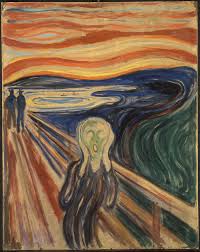
scream

Years ago, a friend of mine hosted his own photographic exhibition in a disused wing of a London psychiatric hospital. Entitled Black Dog, the show documented a series of images depicting his personal struggle with depression. Reminders of the more devastating consequences of an archaic mental health system permeated the austere space. His photos hung from crumbling bricks from which the bare minimum of paint had long since cracked and peeled. Windows only fit for a doll’s house compounded the institutional atmosphere impossible to shake off; remnants of care and comfort untraceable, if they were ever present at all.

Flanked by others gathered for the opening, some commended our mutual friend’s industriousness, while others sneered at his apparent self-elevation to the ranks of artist. One particular ‘professional’ deemed the show an audacious move by a ‘non-creative’ (sic), querying his bona fides.

To my knowledge, he had never claimed to be an artist per se but I could understand her annoyance. However, as a social care worker with a dedicated interest in mental health issues combined with an appetite for the arts, he had no problem testing the boundaries of his own expression, and flung himself into the various strands of discussion he considered available to him. There was no doubt in my mind there was also an underlying subversive element to his enterprise. Susceptible to depression, yet with a wicked sense of humour and a healthy iconoclastic streak, it was no coincidence his show emerged shortly after being snubbed by organisers of a local mental health festival. A mischievous manoeuvre that provoked some valid questions he managed to cleverly raise in a roundabout way.

The local area in question is synonymous with provision of mental health services and houses a number of iconic institutions alongside a famous art college within an edgy, unsanitised, creative scene. The resulting vibrancy has generated a number of mental health based charities and arts based mental health organisations where support services and creativity overlap with madness. Anyone familiar with these sectors will know that while the possibilities for cooperation are endless, so too are those for competition and tension. In reclaiming control over their well-being, many advocates and service-users grew intent on reclaiming the disparaging language used to describe them. From this, the ‘mad community’ was born. And from a visionary and leader within, Bonkersfest came to life:

“A free annual one-day summer arts and music festival, illuminating creativity, madness, individuality and eccentricity; combating stigma and promoting good mental health. BonkersFest! is an empowering tool for the mad community who organise and deliver the event themselves in partnership with a wide range of mad run groups and arts organisations”

The Arts. Community. Mental health. Empowerment. The scope for competing perspectives was predictably wide; my friend one of a number of casualties of this contested terrain, as many of us expected him to be. As an advocate, rather than a service-user, he failed to qualify either as an ‘artist’ or a ‘mad person’. The definition of a mad person remained vague, but a survivor or user of treatment services gave it a loose definition.

The end result was a festival as chaotic as it was enjoyable, characterised by authentic grassroots ownership devoid of corporate gloss; a showcase of creative work by mad people. They had achieved it “themselves”; the day a victorious culmination of the vision of an ex-service user and survivor of schizophrenia. A local chieftain.

In attacking and seizing control of the local discourse on mental health, the rule-book on ‘dialogue’ was temporarily torn up. The most stigmatised and silenced survivors of the mental health system took their rightful place on the stage to celebrate and validate their survival on their own creative terms. In that context, the defiance adopted in drafting the terms of engagement was understandable. In minimising the place of the ‘professional’ and the high functioning depressive, the message of madness was kept intact, untarnished from the well-meaning efforts of the mainstream professionals from which they felt alienated and who too often spoke on their behalf.

Leafing through the programme for the First Fortnight Festival, the relatively new Dublin arts festival addressing mental health issues, it’s hard not to wonder what members of the aforementioned mad community would make of it. Would they find the slick and professional production irksome? What of the programme content? The input from service users? Would it be considered mad enough? Too many of the usual commentators and broadcasters? Any humour? Not humorous enough?

It would seem churlish to criticise any efforts to raise awareness of mental health issues, and while the organisers would likely be commended for theirs overall, I suspect the programme would be pored over in pursuit of evidence of a kindred ethos and spirit.

As it happened, the strict ethos of Bonkerfest was unsustainable. It was to have a short lifespan in the end, falling victim to funding cuts, as so many other worthwhile projects did, and whatever organisational deficit that brought the curtain down. Perhaps, to be truly authentic, it was meant to be a temporary intervention. Even so, it’s tempting to imagine the potential it had to grow from strength to strength into a two-week format similar to First Fortnight, galvanising others along the way and prising wider the potential for dialogue. For that to have happened, a more inclusive and professional production would have likely been required. Whether this would have comprised the integrity of the programme, we’ll never know. I like to think there is room for everyone on the spectrum to come together. We’re all on it somewhere.

That said, is it ever possible to have a mental health festival that fits all? The rise of depression and anxiety as the dominant discourse on mental health in Ireland continues. That this development is cited as sufficient evidence of mental health being taken seriously, makes the jitters and concerns of those with very different conditions understandable. Various personality disorders and schizophrenia remain misunderstood and on the periphery of mainstream discussion, if at all. Understanding depression is a start but far removed from de-stigmatising these conditions, as is supporting the integration of survivors and sufferers into the community and the workplace.

As much as the missed opportunity for Bonkerfest is lamentable, one hopes the organisers of First Fortnight will adopt some of its patrons’ defiance and courage in attempting to bring those silenced and stigmatised in from the margins; and to help give them ownership of the dialogue and direct some questions towards the status quo.
The revolving door

Today, I am burdened with the unenviable task of dismantling the decorations. The tree, the balloons, and the banners must all come down. Having a child’s birthday overlap with the last day of Christmas would motivate most people to rid the room of one lot before replacing them with another. Not us. For one day of the year, our house is such a staggeringly awful monument to kitsch, it qualifies us as contenders for a Channel 4 documentary. Better make that Channel 5, or, if the barrel is really being scraped… TV3.

Being middle-aged parents to a young child means we reminisce about the sketchy details of the labour and birth as though it happened fifty years ago and we were both really drunk at the time. Our indulgent game of This Time *insert relevant number here* Years Ago kicks off on the eve of her birthday. “This time three years ago, I was locked in the bathroom trying to shove a suppository up my arse that the midwife had fobbed me off with that morning”.  Ah, nostalgia.

By noon on her birthday, we have already done a recap of Dad helping himself to a lengthy kip, the derision the birthing ball was greeted with, and the offer from the midwife to listen to Norah Jones when the pain was really revving up. The throat-cutting gesture I mimed in response tends to be more aggressive in the re-telling, which is only fair. Norah fucking Jones. The aural equivalent of knocking back half a Disprin with a glass of your own piss. I have vague recollections of the next bit. “This time three years ago, your Mum was doing her best Bernard Black impersonation to the Midwife called Rowena”. Or Roweeeeeeeeena, as I fondly knew her as.

My labour outtakes

“And not long after that, you arrived!” Before one of us quickly added… “And for a few seconds we thought you were a boy!”. At three years, she is already bored of her parents’ nauseating, heavily exclamation-marked story of her birth, so despairingly asks for another cookie. I stare into the middle-distance and think how mad it is that I’ll never get to go through childbirth again, before asking for the bill.

A series of appointments with her public awaited her back at Decorations R Us. Her farthest flung grandparents first since they’ve reached that age when they will only drive in day-light for fear of getting lost and not knowing who they’ll meet on the road. “You’ll never know who you’ll meet on the road”. There’s an oft repeated statement of fact. I began to wonder if it was my Father’s codified way of announcing “I’ve had enough of this child’s woeful attempts to play the harmonica. Let’s get the fuck outta here, Dear”. On second thoughts, he would never say Dear. I embrace the shift system as the new way to do birthday business.

A steady, yet manageable, stream of Aunties, Uncles, cousins, and the other set of Grandparents, dribble in and out till bedtime. Their generosity and thoughtfulness the perfect antidote to the New Year Comedown; the presence of her biggest fans a real reminder of our good fortune.

Forced to take just one breather in the kitchen, I was about to behead Olaf with the bread-knife when a neighbour sidled up to me with an update on her daughter’s brief encounter with a work colleague. If I recall rightly, I was in a similarly compromised position last year when she chose the moment to tell me of her own sexual conquests with a married man. “I hadn’t had sex in twenty years! I can tell you it’s quite something!”, she whisper-shouted before retreating to the living room to discuss the price of furniture in the local charity shop circuit with my Mother-In-Law. I wondered what’ll it be next year. Our girl will be four. Perish the thought of progress.

This time three years ago, I was alone in the midwife unit suite, cradling our newborn in the quiet before the silence was punctured by the swing of the door ushering in the first round of visitors. The tree stayed up for a further two weeks.

Review: The Theory of Everything

theory of everything

Dublin folklore has it that on hearing Stephen Hawking was in the same local restaurant, another diner couldn’t resist approaching the eminent physicist to gushingly tell him how great he was… in The Simpsons. Urban myth? One likes to hope not, because if his mischievous wit revealed in this film is anything to go by, he would’ve had quite the chuckle at it.

Such is Hawking’s iconic status in popular culture, he even managed to graduate from the esteemed campus of Springfield. A career high along with a few other achievements, notably the odd theoretical breakthrough over the years initially showcased in his 1988 seminal work A Brief History of Time.

Films-goers fearing this one is for science boffins can heave a sigh of relief. There is, of course, the mandatory blackboard littered with enough impenetrable equations to trigger a nasty flashback among even the least maths averse of viewer, and the occasional chin-stroke exchanged between student and mentor (an unlikely David Thewlis); but theoretical physics is peripheral to the film’s main task of deftly unravelling the chemical reactions between two people over the course of a lengthy relationship, which both expected to be short-lived.

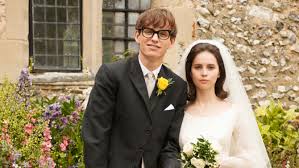
The film opens with the young erudite Hawking (a flawless Eddie Redmayne) strutting through the corridors of Cambridge dithering over what topic to chose for his PhD thesis, and marshaling his propensity for probability into the most prosaic of activities (the durability of an affair between characters in a film he watches, for example) in that self-deprecating way that only very smart people can. A collision with a student of Spanish and French poetry (“medieval poetry of the Iberian Peninsula” to be exact), Jane Wilde (Felicity Jones), leaves them both starry-eyed. The two soon strike up a romance only for the heady rush of early love to be cruelly interrupted by his diagnosis of Motor Neuron Disease. Undeterred, Wilde declares her devotion, and the couple grab the remaining time available to them to dive headlong into marriage and family life.

Based on an adaptation of Jane Hawking’s book Travelling to Infinity: My Life with Stephen Hawking, the film chronicles their relationship over the subsequent thirty years. That it received the blessing from the entire Hawking family lends it an authenticity that allows the viewer to absorb the tenderness and tensions between them with the knowledge that they’re not being manipulated by any over-cooked schmaltz that the makers commendably manage to avoid.

Redmayne impresses with his uncanny portrayal of Hawking’s transition from youthful clumsiness through to middle-age with voice-assisted communication; while Jones captures Jane’s early unwavering devotion, and the ensuing complexities and challenges that inevitably arise from inhabiting a long-term caring role, with conviction.

An affecting, humorous, portrait of a couple that doubles up as Oscar bait with integrity. Also includes a crash-course in black hole singularity (whatever that is) using the aid of peas and spuds for the here-comes-the-science part. And toffs saunter about in gowns in between squashing into ye olde English pubs. Something for everyone then.

4/5

School around the corner

What a difference a week makes; book-ended as it was by songs that evoke emotions so heavy they don’t bear hearing more than once in a year. O Holy Night cracks its whip on the heart, startling it to bolt upright and take off around the track of emotion. Past memories, some magical, others painful; disturbing the earth surrounding dormant feelings as it gallops onward through the bend of hopeful anticipation before hitting the straight. Then chasing Now along the final furlong to cross the line in a perfect photo-finish. A week later Auld Lang Syne will not be able resist pulling at the stray thread dangling from the soul; it won’t be satisfied until it unravels it completely before abandoning it in an untidy heap for its owner to disentangle and roll back up.

For as long as I can remember, I have loved the Eve of Christmas and loathed that of New Year with equal measure. Nothing new or unique in that, says you. This doesn’t go unnoticed. All the New Year greetings are filed long before the credits roll on the spent one. Few, it seems, are alone in longing to keep the head down and let it wash over them. Possibly in a similar haze of miniature snack denial that sees the desperate diner through a sustained period with their considered size. Honey, you shrunk the hot dogs. It’s OK, Dear, there’s another 45 of them in the oven. The relief in the room is palpable.

Under pressure to respond, I get most of my replies texted by 10pm. It used to be that no-one could be arsed going out on New Year’s Eve anymore. In recent years, I mistook the flurry of early evening messages for a preventative measure against an echo of Millennium hysteria that caused ordinarily laid-back folk to fear telecommunication failure at midnight. Now I know it’s a cure against other people phoning them to detonate the ring tone equivalent of Auld Lang Syne, and the risk of letting the wrong person in.

Unlike Christmas Eve, with its camaraderie, the promise of impending bonhomie and threat of reciprocated love among one’s own tribe, NYE sits in judgement in the confessional box of life, waiting for you to enter alone to square up to yourself. Bless me New Year’s Eve, for I have sinned. It has been one year since my last confession and here are my sins…

Like the death-knell signalling the near-end of school holidays, you know the party is coming to an end. The determination to ring the best out of the remaining days is your two fingered salute to the army of Mondays advancing.

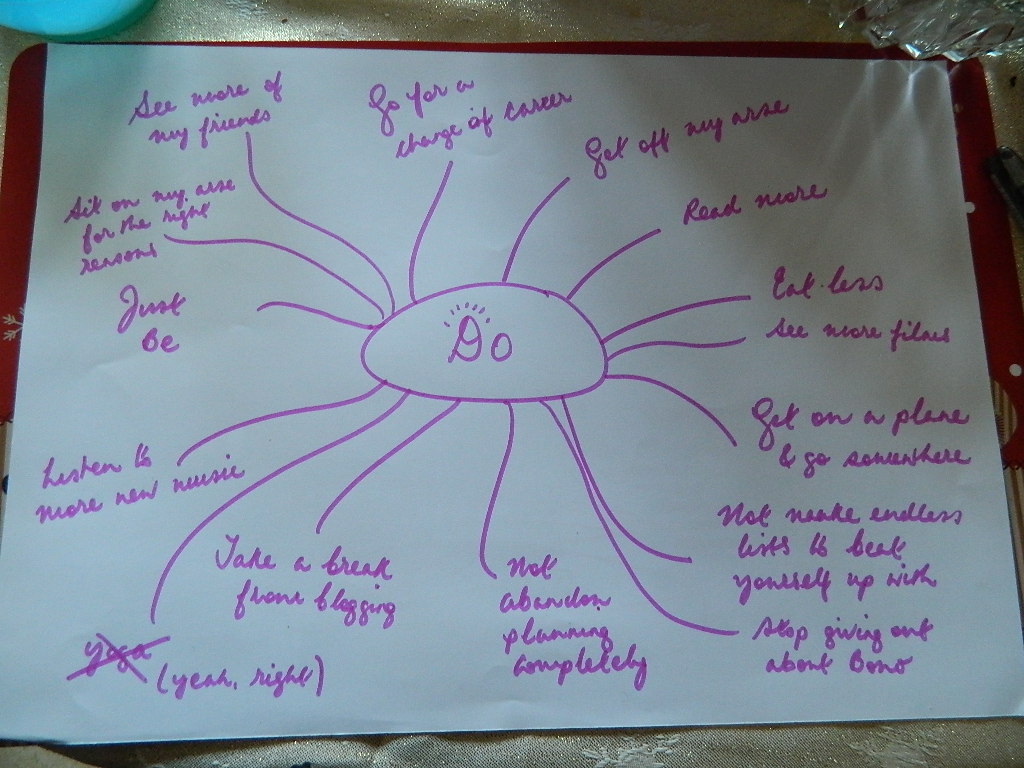
I phone the one friend I can speak to on a night like this. Throwing scorn on the notion of resolution, we resolve to go gentler on ourselves and to meet soon. I ask her what she’s doing. She is loath to write a list but is in the middle of compiling two: one with the things from the past year she wishes to let go; the other with wishes for the coming year. Both will go up in flames in her tiny hearth in the hope that the former will be extinguished, and the latter just put out there. To the universe. She read about it somewhere. I hope the right list attaches itself to the stars, I say. She forgives my outburst of cheese and we say our goodbyes.

An hour later, safely ensconced in our mini-snack stupor, we risk crossing the threshold of midnight with a quick flick to Jools striking up the band. Ten..nine..eight..

Like the classic seasonal ending to a dodgy soap where the credits roll over the scene, my mind’s eye involuntarily pans those chief characters of my life in tonight’s episode. I see my mate with her knees tucked under her chin watching the flames go up; my parents dragging their grandchildren to their feet; my brother waiting to pick up a fare; my State-side friend with a few hours to go; another kicking back in the sun by way of good riddance; and even the odd blogger whose faces I wouldn’t recognise but who I’ve become immensely fond of nonetheless. The powerful round-ups of their year reverberate.

Then the morning comes. Just like that the storm is over. Souls are re-wound with hopeful determination into slightly different shapes than before. And a new year of fleeting speckled pieces of happiness beckons. We’ll do alright.